





Is Your Chemical Hose Really Composite?
2026-10-22 08:35
Imagine this: it's 2 a.m. at a chemical plant in Rotterdam. A maintenance engineer notices a faint whiff of toluene near a transfer hose. By morning, the hose has developed a pinhole leak, forcing an unplanned shutdown. The cost? Tens of thousands of dollars in lost production and cleanup. This scenario is all too common when the wrong hose is specified. So, is your chemical hose really composite? The short answer is: if it's not a true composite hose—with a fluid-contact layer, reinforcement, and cover bonded into a single flexible structure—you're likely compromising safety, efficiency, and cost. In this blog, we'll dive deep into what makes a composite hose truly composite, the pitfalls of using inferior alternatives, and how to select the right hose for your application.
What Exactly Is a Chemical Composite Hose?
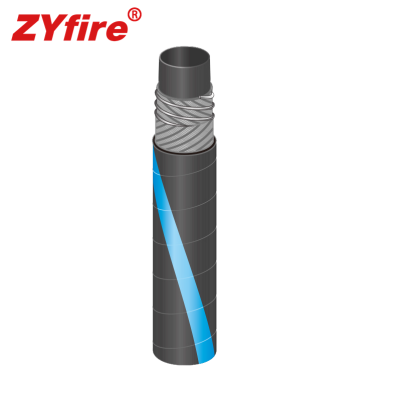
A chemical composite hose is engineered with multiple layers: an inner liner (often PTFE or polypropylene) for chemical resistance, a reinforcement layer (synthetic fibers or steel wire) for pressure and vacuum resistance, and an outer cover (e.g., EPDM or PVC) for environmental protection. These layers are bonded together, creating a hose that is flexible yet durable. Unlike rubber hoses, composite hoses are typically lighter, more flexible, and resistant to a broader range of chemicals. But not all hoses labeled "composite" are created equal. Some manufacturers cut corners, using inferior materials or skipping critical bonding steps, leading to premature failure.
Pain Point 1: Permeation and Leaks
Permeation is the silent killer of chemical hoses. Over time, aggressive chemicals can permeate through the hose liner, causing leaks, environmental hazards, and safety risks. In a typical chemical transfer application, a hose with poor permeation resistance might develop a leak within months, leading to production downtime, cleanup costs, and potential regulatory fines. For instance, a mid-sized chemical distributor in Texas reported that permeation-related failures cost them over $50,000 annually in lost product and maintenance.
Solution: A true composite hose uses a high-density, low-permeation liner, such as PTFE or specialized polypropylene, that is chemically inert to most aggressive substances. At ZYfire Hose Corporation, we use a proprietary multi-layer liner construction that reduces permeation rates by up to 70% compared to standard composite hoses. Additionally, our hoses undergo rigorous permeation testing per ASTM D814 and EN ISO 4080 standards to ensure reliability.
Pain Point 2: Flex Fatigue and Kinking
Chemical hoses are often used in dynamic applications—loading arms, transfer stations, and mobile equipment—where they are subjected to repeated flexing, bending, and even accidental crushing. Inferior hoses may develop kinks, cracks, or delamination, leading to flow restriction or catastrophic failure. A European tank truck operator shared that they were replacing hoses every three months due to flex fatigue, costing them €20,000 per year in hose replacements alone, plus downtime.
Solution: Composite hoses are designed with a helical reinforcement structure that provides excellent flexibility and resistance to kinking. The reinforcement—often a high-tenacity synthetic fiber like aramid or polyester—is embedded in a way that distributes stress evenly, preventing localized fatigue. ZYfire's composite hoses are tested to withstand over 1 million flex cycles without failure, far exceeding industry standards. Our unique bonding process ensures that layers do not delaminate even under extreme flexing.
Pain Point 3: Chemical Compatibility and Temperature Extremes
Chemical compatibility is complex. A hose that works for one chemical may fail miserably for another. Moreover, temperature extremes can accelerate degradation. For example, a hose used for transferring hot solvents at 120°C might become brittle and crack, while a hose for cryogenic fluids might lose flexibility. A specialty chemical manufacturer in Germany struggled with hose failures when transferring a mixture of acids and solvents at elevated temperatures, leading to frequent replacements and safety incidents.
Solution: Composite hoses can be tailored with specific liners and covers to match the chemical and temperature requirements. ZYfire offers a wide range of liner materials, including PTFE, PFA, FEP, and polypropylene, each with distinct chemical resistance profiles. Our technical team works with customers to select the optimal hose construction based on a detailed chemical compatibility chart and operating conditions. For high-temperature applications, we use advanced fluoropolymers that maintain flexibility and integrity up to 260°C.
Customer Success Stories
Let's look at how real companies have benefited from switching to ZYfire's chemical composite hoses.
Case 1: BASF, Ludwigshafen, Germany
BASF, a global chemical giant, was experiencing frequent hose failures in their sulfuric acid transfer lines. The hoses were lasting only 4-6 weeks due to permeation and flex fatigue. After switching to ZYfire's PTFE-lined composite hose with aramid reinforcement, the hose life extended to over 12 months. "The reduction in downtime and maintenance costs has been significant—we estimate savings of over €100,000 annually," said Dr. Klaus Müller, Maintenance Manager.
Case 2: Dow Chemical, Freeport, Texas, USA
Dow Chemical needed a hose for transferring a corrosive solvent mixture at 80°C. Previous hoses lasted only 3 months. ZYfire provided a custom composite hose with a polypropylene liner and EPDM cover, which lasted 18 months. "We've seen a 60% reduction in hose replacement costs and a dramatic decrease in leak incidents," commented Sarah Johnson, Procurement Specialist.
Case 3: SABIC, Jubail, Saudi Arabia
SABIC required hoses for loading ethylene dichloride (EDC) at their petrochemical complex. The harsh desert environment and continuous operation demanded a robust solution. ZYfire's composite hose with a PVDF liner and UV-resistant cover exceeded expectations, lasting over 2 years. "The reliability of these hoses has improved our loading efficiency by 15%," said Ahmed Al-Farsi, Operations Engineer.
Case 4: AkzoNobel, Amsterdam, Netherlands
AkzoNobel faced issues with hose kinking and flow restriction in their paint production line. ZYfire's composite hose with a helical wire reinforcement eliminated kinking, resulting in a 20% increase in flow rate and a 30% reduction in energy consumption. "The flexibility and durability of these hoses have streamlined our operations," noted Pieter van den Berg, Plant Manager.
Applications and Partnerships
Chemical composite hoses are used across a wide range of industries, including chemical processing, petrochemicals, pharmaceuticals, food and beverage, and marine transfer. They are ideal for loading arms, tank truck transfer, in-plant transfer, and temporary piping. ZYfire Hose Corporation has established partnerships with major OEMs and distributors worldwide, including relationships with companies like Grundfos, Alfa Laval, and Emerson. These partnerships are built on a shared commitment to quality and innovation, ensuring that end-users receive the best possible hose solutions.
FAQ
Q1: What is the difference between a composite hose and a rubber hose?
A: Composite hoses are typically lighter, more flexible, and have better chemical resistance than rubber hoses. They are constructed with a thermoplastic liner, reinforcement, and cover, whereas rubber hoses use vulcanized rubber. Composite hoses are also less prone to permeation and can handle a wider range of chemicals.
Q2: How do I know if a composite hose is suitable for my chemical?
A: Always consult the manufacturer's chemical compatibility chart. ZYfire provides a comprehensive database and offers technical support to match the hose liner and cover to your specific chemical, concentration, and temperature.
Q3: Can composite hoses be used for food-grade applications?
A: Yes, composite hoses with FDA-compliant liners (e.g., PTFE or polypropylene) are available for food and beverage applications. ZYfire offers hoses that meet FDA and EU 1935/2004 regulations.
Q4: What is the typical service life of a chemical composite hose?
A: With proper selection and maintenance, a high-quality composite hose can last 2-5 years, depending on the application. Factors like chemical aggressiveness, temperature, and flex frequency affect lifespan.
Q5: How often should I inspect my composite hoses?
A: We recommend visual inspections before each use and more thorough inspections (including pressure testing) at least quarterly. Any signs of wear, cracking, or leaks should prompt immediate replacement.
Conclusion & Call to Action
Choosing the right chemical composite hose is critical for safety, efficiency, and cost savings. Don't settle for inferior products that promise composite construction but fail to deliver. At ZYfire Hose Corporation, we combine advanced materials, rigorous testing, and decades of expertise to provide hoses that truly perform. To learn more about our technology and how we can help you optimize your chemical transfer operations, download our technical whitepaper or contact our sales engineers today. Your operations—and your bottom line—will thank you.
Related News
More >-
![Is Your 1 Inch Fire Hose Really Delivering?]()
Is Your 1 Inch Fire Hose Really Delivering?
1. Introduction: The Hidden Cost of a Seemingly Simple Hose 2. Pain Point 1: Pressure Drop and Flow Inefficiency 3. Pain Point 2: Abrasion and Kinking Failures 4. Pain Point 3: Chemical and UV Degradation 5. Solution 1: Optimized Inner Diameter and Liner Technology 6. Solution 2: Advanced Reinforcement and Cover Compounds 7. Solution 3: Material Selection for Extreme Environments 8. Customer Success Stories 9. Applications and Partnerships 10. FAQ 11. Conclusion and Call to Action
-
![Can Mining Dewatering Solutions Cut Costs by 40%?]()
Can Mining Dewatering Solutions Cut Costs by 40%?
1. Introduction: The Costly Reality of Mine Water 2. The Hidden Costs of Inefficient Dewatering 3. ZYfire Hose Corporation: Engineering Dewatering Solutions That Last 4. Real-World Results: Case Studies from Global Mining Operations 5. Applications and Partnerships: Where ZYfire Makes a Difference 6. Frequently Asked Questions by Engineers and Procurement Managers 7. Conclusion: Take Control of Your Mine's Water—and Your Bottom Line
-
![What Makes Forestry 1872 Hose Unmatched?]()
What Makes Forestry 1872 Hose Unmatched?
1. Introduction: The high-stakes world of forestry firefighting and the legacy of Forestry 1872 hose. 2. Pain Points: Abrasion, UV degradation, and coupling failures in rugged terrain. 3. Solutions: Advanced rubber compounds, through-the-weave construction, and precision couplings from ZYfire Hose Corporation. 4. Customer Success Stories: Real-world results from Oregon, British Columbia, Chile, and New Zealand. 5. Applications and Partnerships: Wildland firefighting, municipal forestry units, and OEM collaborations. 6. FAQ: Technical answers for engineers and procurement managers. 7. Conclusion & Call to Action: Download the white paper or contact a sales engineer.
-
![What Makes Industrial Hose Fail in High-Pressure Applications?]()
What Makes Industrial Hose Fail in High-Pressure Applications?
1. Introduction: The hidden cost of hose failure\n2. Pain Point 1: Abrasion and premature wear\n3. Pain Point 2: Chemical incompatibility and permeation\n4. Pain Point 3: Pressure spikes and coupling blowouts\n5. Solutions: Engineered hose construction\n6. Case studies: Real-world success\n7. Applications and partnerships\n8. FAQ\n9. Conclusion and call to action
-
![Why Is MED Approved Fire Hose Critical for Marine Safety?]()
Why Is MED Approved Fire Hose Critical for Marine Safety?
1. Introduction: The Alarm That Changed Everything 2. The Hidden Dangers: Three Pain Points in Marine Fire Safety 3. The MED Solution: Engineering Fire Hose Excellence 4. Real-World Success: Case Studies from the Front Lines 5. Applications and Partnerships: Where MED Hose Makes a Difference 6. FAQ: What Engineers and Procurement Managers Really Ask 7. Conclusion: Don't Wait for the Alarm
-
![Why Is Firequip Hose the Gold Standard in Firefighting?]()
Why Is Firequip Hose the Gold Standard in Firefighting?
1. Introduction: The critical role of firequip hose in emergency response. 2. Pain Points: Common failures in fire hose systems and their consequences. 3. Solutions: How ZYfire Hose Corporation addresses these challenges with advanced engineering. 4. Case Studies: Real-world success stories from diverse regions. 5. Applications and Partnerships: Key industries and collaborations. 6. FAQ: Technical insights for engineers and procurement managers. 7. Conclusion and Call to Action: Emphasizing value and next steps.
-
![Why Does Your NBR Hose Fail So Soon?]()
Why Does Your NBR Hose Fail So Soon?
1. Introduction: The hidden cost of premature hose failure 2. Pain Point 1: Abrasion and wear in high-friction environments 3. Pain Point 2: Chemical degradation from oils and solvents 4. Pain Point 3: Ozone and UV cracking in outdoor applications 5. Solutions: How NBR rubber covered hose addresses these challenges 6. Customer Success Stories: Real-world results from ZYfire Hose Corporation 7. Applications and Partnerships: Where NBR hose makes a difference 8. FAQ: Answers to common questions from engineers and procurement managers 9. Conclusion and Call to Action
-
![Why Blue Layflat Hose? The Ultimate Guide]()
Why Blue Layflat Hose? The Ultimate Guide
1. Introduction: The question and the answer 2. Pain Points in Industrial Hose Applications 3. The Blue Layflat Hose Solution 4. Customer Success Stories 5. Applications and Partnerships 6. FAQ for Engineers and Procurement Managers 7. Conclusion and Call to Action
Get the latest price? We'll respond as soon as possible(within 12 hours)