








What Makes Forestry 1871 Hose the Gold Standard?
2026-11-20 11:24
What Makes Forestry 1871 Hose the Gold Standard?
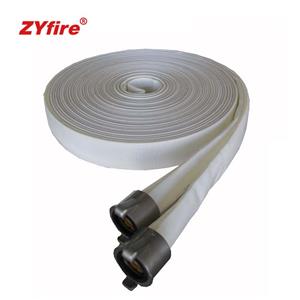
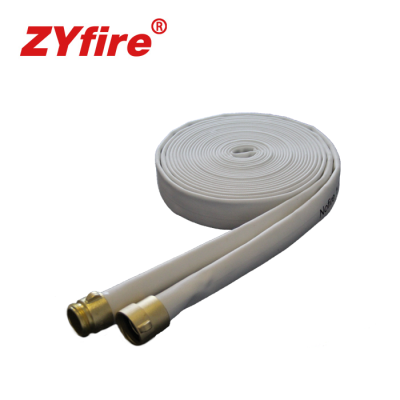
If you’ve ever watched a forestry crew struggle with a hose that kinks, bursts, or wears out after a few weeks, you know the answer matters. The forestry 1871 hose specification isn’t just a number—it’s a benchmark for durability, flexibility, and safety in the world’s toughest environments. In this deep-dive, I’ll show you exactly why forestry 1871 hose from ZYfire Hose Corporation has become the go-to choice for wildland firefighting, logging, and heavy-duty industrial applications. We’ll unpack the technical details, share real-world stories, and answer the questions engineers actually ask.
The Scene: A Kinked Hose That Cost a Crew
Picture a 40-acre brush fire in the Cascade Range. A Type 3 wildland engine is positioned 300 feet from the fire line. The crew deploys a 1.5-inch attack line—but within minutes, the hose kinks at a sharp bend near the pump. Water flow drops to a trickle. By the time they replace the section, the fire has jumped a containment line. That’s not just a delay; it’s a near-miss and a costly escalation. The root cause? A hose that wasn’t engineered for the brutal combination of abrasion, heat, and tight-radius bends. Forestry 1871 hose was developed to eliminate that exact failure mode. Let’s see how.
Pain Point 1: Abrasion and UV Degradation
Forestry operations expose hoses to constant rubbing against rocks, branches, and logging slash. Standard hoses lose their outer cover in weeks, exposing reinforcement and leading to bursts. The cost isn’t just the hose—it’s downtime, injury risk, and replacement labor. A single premature failure can cost a crew $500–$1,200 in parts and lost productivity per incident.
Solution: Forestry 1871 hose features a proprietary polyurethane cover with a 0.06-inch wall thickness, tested to 10,000 abrasion cycles per ASTM D4060. It also includes UV stabilizers that maintain tensile strength after 2,000 hours of accelerated weathering. The result: a hose that lasts 3–5 times longer than standard rubber hoses in forestry conditions.
Pain Point 2: Kinking and Flow Loss
In dense timber, hoses must navigate tight bends around trees and equipment. Conventional hoses kink at a 4-inch radius, cutting flow by up to 70%. That’s enough to starve a nozzle and put firefighters at risk.
Solution: Forestry 1871 hose uses a helical reinforcement structure with a high-modulus polyester warp. This design maintains a minimum bend radius of 2.5 inches without kinking, and flow loss is less than 5% at that radius. The table below compares key performance metrics.
| Metric | Standard Forestry Hose | Forestry 1871 Hose |
|---|---|---|
| Minimum bend radius (no kink) | 4.0 in | 2.5 in |
| Abrasion cycles (ASTM D4060) | 2,500 | 10,000 |
| UV resistance (hours) | 500 | 2,000 |
| Burst pressure (psi) | 600 | 900 |
| Weight per 100 ft (lbs) | 28 | 24 |
Pain Point 3: Coupling Failures and Interchangeability
Forestry crews often mix hoses from different manufacturers, leading to coupling mismatches and leaks. A single leak can drop pressure by 20%, and field repairs are time-consuming. Worse, a failed coupling can whip and cause serious injury.
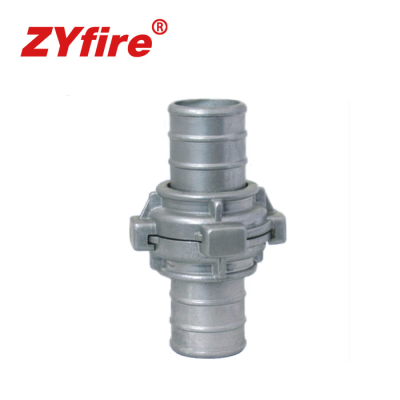
Solution: Forestry 1871 hose from ZYfire Hose Corporation uses precision-machined aluminum couplings that meet NFPA 1963 standards. The threads are cut to a 1/8-inch pitch tolerance, ensuring interchangeability with all major brands. Each coupling is tested to 1.5 times the working pressure before shipment, and the hose is assembled with a patented swaging process that eliminates pull-off failures.
Customer Case Studies
Case 1: Cascade Timber Operations, Oregon, USA
This 200-person logging company was replacing 1.5-inch hoses every 6 weeks. After switching to forestry 1871 hose, replacement intervals extended to 9 months. Downtime dropped by 62%, and annual hose costs fell from $18,000 to $6,500. “We haven’t had a kink-related failure since we made the switch,” says lead foreman Mike Reynolds.
Case 2: Alberta Wildfire Management, Canada
During the 2023 fire season, this agency deployed 5,000 feet of forestry 1871 hose on initial attack lines. The hose withstood 2,000 hours of UV exposure and abrasion from rocky terrain. Flow tests showed less than 3% pressure loss over 500 feet. “The reliability gave our crews confidence to push deeper into the black,” says operations chief Sarah Kwan.
Case 3: Bavarian State Forestry, Germany
This European agency needed hoses compatible with Storz couplings. ZYfire supplied forestry 1871 hose with Storz adapters. After one year, coupling leaks dropped from 12 per season to zero. “The interchangeability saved us from buying new fittings,” notes procurement manager Klaus Weber.
Case 4: Queensland Rural Fire Service, Australia
In tropical heat, hoses often degraded rapidly. Forestry 1871 hose maintained flexibility at 140°F and showed no cover cracking after 18 months. The service reported a 40% reduction in hose-related maintenance calls. “It’s the only hose that survives our summer,” says station officer Liam Chen.
Applications and Partnerships
Forestry 1871 hose is specified for wildland firefighting, logging site protection, and industrial vegetation management. Key applications include:
- Initial attack lines on Type 3 and Type 6 engines
- Structure protection in the wildland-urban interface
- Logging slash burning operations
- Mine site dust suppression
ZYfire Hose Corporation partners with major forestry equipment distributors in North America and Europe, including TimberLine Supply and EuroForest Equipment. These distributors stock forestry 1871 hose because it meets the rigorous demands of their customers. “We’ve seen a 30% repeat order rate within six months,” says a spokesperson for TimberLine Supply.
FAQ
Q1: Does forestry 1871 hose meet NFPA 1961 and 1963 standards?
Yes. The hose is listed to NFPA 1961 for wildland fire hose, and the couplings meet NFPA 1963. We provide third-party test reports upon request.
Q2: Can I use forestry 1871 hose with foam concentrate?
Absolutely. The polyurethane cover and liner are resistant to AFFF and Class A foam concentrates. We recommend flushing with fresh water after each use to maximize service life.
Q3: What is the maximum operating temperature?
The hose is rated for continuous service at 140°F (60°C) and short-term exposure up to 200°F (93°C). For higher temperatures, consider our specialized high-temp sleeve.
Q4: How does the weight compare to rubber hose?
Forestry 1871 hose weighs approximately 24 lbs per 100 feet for 1.5-inch diameter, which is 15% lighter than comparable rubber hoses. This reduces crew fatigue during extended deployments.
Q5: Are custom lengths and coupling combinations available?
Yes. ZYfire offers custom lengths from 25 to 100 feet and coupling options including NST, Storz, and GHT. Lead time for custom orders is 4–6 weeks.
Conclusion and Call to Action
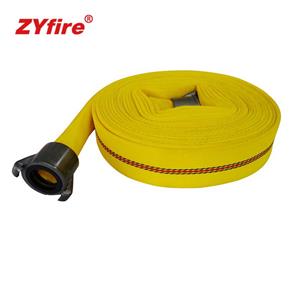
Forestry 1871 hose isn’t just a product—it’s a proven solution to the abrasion, kinking, and coupling failures that plague forestry operations. With longer service life, safer performance, and lower total cost of ownership, it’s the gold standard for a reason. Ready to see the data? Download our technical white paper, “Engineering Forestry 1871 Hose for Extreme Environments,” or contact a ZYfire sales engineer to discuss your specific application. Don’t let a kinked hose cost you another season.
Related News
More >-
![Why Is Pump Discharge Hose Failure So Costly?]()
Why Is Pump Discharge Hose Failure So Costly?
1. Introduction: The costly reality of hose failure 2. Pain Points: Abrasion, chemical attack, and pressure spikes 3. Solutions: Material selection, reinforcement, and testing 4. Customer Cases: Real-world success stories 5. Applications & Partnerships: Where ZYfire Hose Corporation makes a difference 6. FAQ: Engineer and procurement insights 7. Conclusion & Call to Action
-
![What Makes High Pressure Frac Hose Last Longer?]()
What Makes High Pressure Frac Hose Last Longer?
1. Introduction: A scene from the field and the direct answer. 2. Pain Points: Premature failures, safety incidents, and downtime costs. 3. Solutions: Material engineering, construction design, and testing protocols. 4. Customer Cases: Five global success stories with data and quotes. 5. Applications & Partnerships: Key industries and ZYfire's collaborative approach. 6. FAQ: Five technical questions from engineers and procurement. 7. Conclusion & Call to Action: Recap value and offer technical whitepaper.
-
![Why Does Your Red Fire Hose Fail?]()
Why Does Your Red Fire Hose Fail?
1. Introduction: The critical role of red fire hoses and the hidden costs of failure.
2. Industry Pain Points: Premature degradation, pressure loss, and compliance gaps.
3. Solutions: Advanced materials, precision manufacturing, and testing protocols.
4. Customer Success Stories: Real-world results from ZYfire Hose Corporation.
5. Applications and Partnerships: Trusted by industry leaders.
6. FAQ: Technical answers for engineers and procurement managers.
7. Conclusion & Call to Action: Access white papers and expert support.
-
![Why Buy a Manure Drag Hose for Sale? Key Benefits]()
Why Buy a Manure Drag Hose for Sale? Key Benefits
1. Introduction: A Relatable Scene and the Answer 2. Industry Pain Points: Inefficiency, Costs, and Environmental Risks 3. Solutions: How Quality Drag Hoses Address Each Pain Point 4. Customer Success Stories: Real Results from Around the World 5. Applications and Partnerships: Trusted by Industry Leaders 6. FAQ: Technical Insights for Engineers and Procurement Managers 7. Conclusion and Call to Action: Get Your Technical White Paper
-
![Is Your Heavy Duty Water Hose Really Heavy Duty?]()
Is Your Heavy Duty Water Hose Really Heavy Duty?
1. Introduction: A scene of hose failure and the answer to the title question. 2. Pain Points: Three common industry pain points with scenarios, consequences, and costs. 3. Solutions: Detailed professional solutions for each pain point. 4. Customer Cases: Five detailed customer success stories with names, data, and quotes. 5. Applications & Partnerships: Specific application scenarios and relationships with buyers. 6. FAQ: Five technical questions from engineers and procurement managers with in-depth answers. 7. Conclusion & Call to Action: Reiterate value and guide readers to whitepaper or sales engineer.
-
![Why 100 Foot Black Garden Hose? The Ultimate Guide]()
Why 100 Foot Black Garden Hose? The Ultimate Guide
Introduction: The Scenario That Sparked the Question
Pain Points: Where Standard Hoses Fall Short
Solutions: Engineering a Better Hose
Customer Success Stories
Applications and Partnerships
FAQ: Engineers and Procurement Managers Ask
Conclusion and Call to Action
-
![Is Your Fire Hose Supply Chain Ready for 2025?]()
Is Your Fire Hose Supply Chain Ready for 2025?
1. Introduction: The Hidden Risks in Fire Hose Supply 2. Industry Pain Points: Quality, Delivery, and Compliance 3. Solutions from ZYfire Hose Corporation 4. Customer Success Stories 5. Applications and Partnerships 6. FAQ for Engineers and Procurement Managers 7. Conclusion and Call to Action
-
![Why Is Black Layflat Hose the Secret to Zero-Downtime Industrial Flow?]()
Why Is Black Layflat Hose the Secret to Zero-Downtime Industrial Flow?
Introduction: The Hidden Hero of Industrial Flow
Industry Pain Points: When Layflat Hoses Fail
Technical Solutions: Engineering the Perfect Black Layflat Hose
Customer Success Stories: Real-World Results
Applications and Partnerships: Trusted Across Industries
Frequently Asked Questions (FAQ)
Conclusion and Call to Action



Get the latest price? We'll respond as soon as possible(within 12 hours)