




How Good is Black Layflat Hose?
2025-12-25 10:45
When it comes to demanding water transfer applications—from dewatering a construction site to irrigating hundreds of acres—professionals know that not all hoses are created equal. The wrong choice can lead to downtime, costly repairs, and immense frustration. If you've been searching for a hose that balances durability, flexibility, and reliable performance, you've likely encountered the black layflat hose. This article cuts through the noise to analyze if this specific type of hose lives up to its promises, examines the common pain points it solves, and provides a clear, expert-backed perspective to guide your purchasing decision.
Understanding the Black Layflat Hose: More Than Just Color
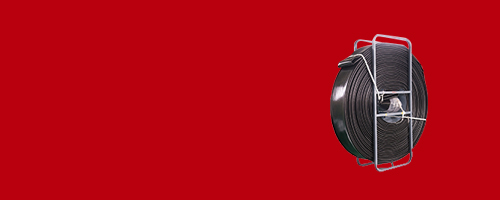
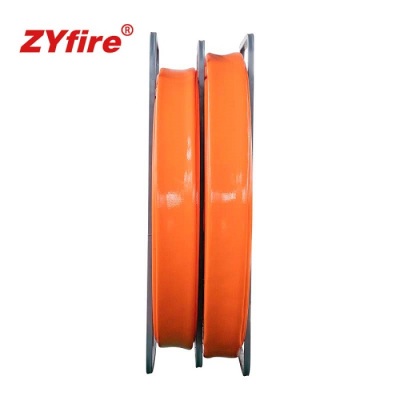
A layflat hose is designed to lie flat when empty and expand to a full round shape under pressure, making it incredibly efficient for storage, transport, and deployment. The distinctive black color is typically not a cosmetic choice but a functional one. It often signifies the use of compounds like Nitrile Rubber (NBR) or EPDM in the hose's construction, which include carbon black as a reinforcing agent-5. This additive dramatically enhances the hose's resistance to damaging ultraviolet (UV) rays from the sun, a primary killer of many plastic or lower-grade hoses-1.
These hoses are engineered for high-volume, high-pressure transfer over long distances. Common applications where they are indispensable include:
Agriculture & Irrigation: For mainline and temporary irrigation systems across fields-6.
Construction & Industrial Dewatering: Pumping water out of trenches, foundations, and flooded sites-10.
Firefighting Support: As a reliable water supply line for pumpers and other equipment-1.
Mining and Quarrying: Handling slurry and dewatering in harsh environments-5.
Specialized Uses: From flyboard water sports to disaster relief pumping operations-10.
Industry Pain Points: What Other Hoses Get Wrong
Through decades of industry engagement, ZYfire Hose Corporation has identified the critical failure points that plague users of substandard fluid transfer solutions. Understanding these pain points is the first step toward finding an effective solution.
Premature Weathering and Degradation: Many hoses, especially those with PVC or low-grade materials, crack, stiffen, or become brittle after prolonged sun exposure. One long-time gardener lamented how some hoses become "sticky, then discolors, and finally starts cracking then splitting" after just one year-2. This renders them useless and creates a constant replacement cycle.
Kinking and Flow Restriction: A kinked hose stops work in its tracks. Kinks damage the hose's internal structure, create weak points, and severely reduce water pressure and flow at the critical moment you need it most. Users often express a strong preference for rubber over vinyl precisely because "they tend to kink a bit more"-2.
Poor Abrasion Resistance and Physical Damage: On rough terrain—filled with rocks, gravel, or debris—a hose can be quickly gouged, torn, or worn through. A hose that cannot withstand being driven over by heavy equipment or dragged across abrasive surfaces is a liability on any job site-2.
Inadequate Pressure Rating and Burst Failures: Using a hose rated for low pressure in a high-pressure application is dangerous. A burst hose can cause flooding, equipment damage, and personal injury. Professionals need a hose with a clear, reliable working pressure and a high safety factor.
Heavy Weight and Difficult Handling: Traditional rubber hoses can be extremely heavy when filled with water, making them exhausting to move and reposition. This weight increases labor costs and the risk of injury.
Meeting Customer Needs: What Professionals Truly Expect
In response to these pain points, customer expectations are clear and non-negotiable. They don't just want a hose; they demand a reliable, durable, and efficient tool that simplifies their work.
Long-Term Durability & Value: The foremost expectation is a product that lasts for multiple seasons or projects. Customers are tired of disposable hoses. They seek a solution with superior UV, ozone, and weather resistance that justifies its initial investment over many years. As one user noted, a quality rubber hose can last 25 years even when left out in the sun-2.
Uninterrupted, High-Volume Flow: Whether watering crops or draining a site, consistent, high-flow performance is critical. Customers need a hose that maintains its internal diameter under pressure, resists kinking, and has smooth couplings to minimize pressure drop.
Job-Site Toughness: The hose must be an asset, not a fragile item that requires constant babying. It needs to withstand pinching, crushing, abrasion, and harsh chemicals (like fertilizers or mild industrial fluids) commonly found in work environments.
Operational Safety and Reliability: There is zero tolerance for failures that cause downtime or hazards. Customers expect certified pressure ratings, secure couplings, and materials that are fit for purpose. Trust in the product's specifications is paramount.
Ease of Use and Storage: A hose that is lighter weight, remains flexible in cold weather, and coils or folds easily saves significant time and labor. The "layflat" feature itself is a direct response to the need for compact storage and quick deployment.
Engineered Solutions: How the Right Black Layflat Hose Answers the Call
A professionally engineered black layflat hose, such as those developed by ZYfire Hose Corporation, addresses each pain point with targeted material science and design. Here’s how a high-quality hose provides practical solutions:
Table: Pain Points vs. Engineering Solutions in Black Layflat Hoses
| Customer Pain Point | Engineering Solution in Quality Layflat Hose | Key Material/Design Feature |
|---|---|---|
| Premature Sun Damage | Superior UV & Ozone Resistance | Carbon-reinforced NBR or EPDM cover-1-5 |
| Kinking & Flow Loss | True Layflat, Kink-Resistant Design | Synthetic textile reinforcement-1 & flexible rubber compound |
| Abrasion & Crushing | Tough, Abrasion-Resistant Outer Jacket | High-tensile reinforced rubber-7 |
| Pressure Bursts & Failures | High Working Pressure with Safety Factor | Multi-layer construction with woven reinforcement (e.g., 3:1 safety factor)-5 |
| Heavy Weight & Stiffness | Lightweight, Flexible Handling | Optimized rubber compound and layflat design for empty-state flexibility |
Real-World Performance from ZYfire:
ZYfire Hose Corporation integrates these solutions into its product development. For instance, their layflat hoses utilize high-strength synthetic yarn reinforcement within a durable rubber matrix. This creates a hose that can handle significant working pressures—often in the range of 10-16 bar (150-230 PSI) or higher for specialized models-1—while remaining flexible enough to deploy rapidly.
One project manager for a large-scale agricultural operation shared his experience: "We switched to a ZYfire black layflat system for our seasonal irrigation. The difference in setup time alone saved us days of labor. Two seasons in, with the hose constantly exposed in the fields, and we've had zero failures or leaks. The durability has been exceptional."
Partnering for Success: ZYfire's Collaborative Approach
ZYfire Hose Corporation doesn't just sell hoses; it builds partnerships to solve complex fluid transfer challenges. As a publicly listed company specializing in fluid transmission products, ZYfire's expertise is deep-rooted-3-8. They work closely with:
OEMs & Equipment Manufacturers: Integrating custom hose solutions into pumping, firefighting, and agricultural machinery.
Distributors & Dealers: Providing comprehensive product training and technical support to ensure end-users get the right hose for their application.
Large-Scale End-Users: From mining and construction conglomerates to government agencies, offering direct engineering support for major projects.
This partnership model ensures that the products delivered are not just generic items but tailored solutions that meet specific pressure, length, chemical resistance, and coupling requirements.
Frequently Asked Questions (FAQs) for European & American Users
Q1: Is the black color on these hoses safe for potable water transfer?
A: Not automatically. While the black color often indicates UV-resistant rubber, you must confirm the specific hose model is certified for potable water (e.g., meets NSF/ANSI 61 or WRAS standards). Many industrial black layflat hoses are designed for non-potable uses like irrigation or dewatering.
Q2: How does a layflat hose perform in freezing temperatures?
A: High-quality rubber layflat hoses, especially those made with EPDM, maintain flexibility in very cold conditions, some rated as low as -40°F (-40°C)-5. However, you must always drain the hose completely after use in sub-freezing weather, as trapped water will freeze and expand, potentially damaging the hose.
Q3: What is the real advantage of a layflat hose over a standard rubber suction hose?
A: The key advantages are storage efficiency and deployment speed. A 100-meter layflat hose can be folded into a compact stack, while a rigid suction hose of the same length requires immense storage space and is far heavier to transport. The layflat hose unrolls quickly and lies flat without a bulky coil.
Q4: What maintenance do these hoses require?
A: Maintenance is minimal but crucial for longevity. After use, flush the hose with clean water to remove debris or sediments. Allow it to dry fully before storing (lay flat or coil loosely, avoid tight folds over sharp edges). Store in a cool, dry place out of direct sunlight when possible, and inspect couplings and the hose surface for damage periodically.
Q5: For a large farm irrigation project, is it better to buy one very long hose or multiple connected sections?
A: This depends on your terrain and system design. A single, very long hose reduces potential leak points at connections but can be harder to maneuver and repair if damaged. Using multiple sections with reliable camlock or quick-connect couplings-1 offers greater flexibility in layout and easier replacement of damaged sections. Ensure all couplings have the same internal diameter to avoid flow restriction.
Conclusion
The question "How good is a black layflat hose?" has a clear answer: when engineered and manufactured to high standards, it is an exceptionally good and reliable tool for professional and heavy-duty applications. It directly solves the most common and costly problems of premature sun damage, kinking, abrasion, and pressure failure.
The key is to look beyond the basic description. Focus on the material specifications (like NBR or EPDM), the verified pressure ratings, the quality of reinforcement, and the reputation of the manufacturer. Companies like ZYfire Hose Corporation, with their dedicated focus on R&D and fluid transmission technology, exemplify the expertise needed to produce hoses that meet the rigorous demands of global industries-8.
Investing in a high-quality black layflat hose is not merely a purchase; it's a strategic decision for efficiency, safety, and long-term cost savings. By choosing a product designed to address the core pain points of your specific application, you secure a piece of equipment that will perform reliably, season after season, project after project.
Related News
More >-
![Why Sexless Hose Couplings Are Revolutionizing High-Pressure Industrial Systems]()
Why Sexless Hose Couplings Are Revolutionizing High-Pressure Industrial Systems
1. Introduction: The Hidden Cost of Coupling Failures 2. Pain Points: Leakage, Maintenance Downtime, and Safety Hazards 3. Solution: How Sexless Hose Couplings Eliminate These Issues 4. Customer Success Stories 5. Applications and Partnerships 6. FAQ for Engineers and Procurement Managers 7. Conclusion and Call to Action
-
![Is 50 ft the Optimal Length for Fire Hose?]()
Is 50 ft the Optimal Length for Fire Hose?
1. Introduction: The 50 ft Fire Hose Question 2. Industry Pain Points: When 50 ft Falls Short 3. The Engineering Answer: Why 50 ft Works 4. Real-World Success: Case Studies 5. Applications and Partnerships 6. FAQ for Engineers and Procurement 7. Conclusion and Call to Action
-
![Is Your Key Combat Ready Hose Truly Ready?]()
Is Your Key Combat Ready Hose Truly Ready?
1. Introduction: The critical moment that tests your hose
2. Pain Point 1: Kinking and flow restriction under pressure
3. Pain Point 2: Abrasion and environmental degradation
4. Pain Point 3: Coupling failures and incompatible connections
5. Solutions: Engineering a truly combat ready hose
6. Customer Success Stories
7. Applications and Partnerships
8. FAQ for Engineers and Procurement Managers
9. Conclusion and Call to Action -
![Why 75 Foot Coiled Garden Hose Is a Game Changer?]()
Why 75 Foot Coiled Garden Hose Is a Game Changer?
-
![Why PE Hose Is the Hidden Hero of Industrial Safety?]()
Why PE Hose Is the Hidden Hero of Industrial Safety?
This article explores the critical role of PE hose in industrial applications, addressing common pain points, offering solutions, and showcasing real-world successes. It includes FAQs and a call to action for technical resources.
-
![Why 50 Foot Fire Hose Outperforms Shorter Lines?]()
Why 50 Foot Fire Hose Outperforms Shorter Lines?
A detailed technical blog exploring the critical role of 50-foot fire hose in industrial fire protection, addressing common pain points, solutions, real-world case studies, applications, FAQs, and a call to action for professional guidance.
-
![Why Choose ZYfire Hose for Chemical Industry?]()
Why Choose ZYfire Hose for Chemical Industry?
-
![Why Upgrade to a Manure Drag Hose for Sale?]()
Why Upgrade to a Manure Drag Hose for Sale?
Introduction: The pain of traditional manure application. Pain points: compaction, odor, nutrient loss. Solution: drag hose systems. Customer cases. Applications and partnerships. FAQ. Conclusion.
Get the latest price? We'll respond as soon as possible(within 12 hours)