




Fire Hose: More Than Just Water?
2026-01-30 11:24
Introduction: Rethinking the Fire Hose
Have you ever paused to consider what truly lies beneath the rugged exterior of a fire hose? At first glance, it might seem like a simple tool for dousing flames, but in the world of high-end manufacturing, it's a critical component that can make or break operational efficiency. Imagine a scenario: a high-pressure hydraulic system in an automotive plant fails due to a subpar hose, leading to costly downtime and safety hazards. This isn't just about water flow; it's about precision, durability, and innovation. In this blog, we delve into why fire hose technology is evolving beyond its traditional role, driven by companies like ZYfire Hose Corporation, which specializes in cutting-edge solutions for demanding industrial applications.
Deepening the Pain Points: Where Things Go Wrong
In high-stakes environments, fire hoses face unique challenges that can escalate into significant issues. Let's explore two key pain points:
1. Pressure Fluctuations and Leakage: In industries such as oil and gas or chemical processing, hoses are subjected to extreme pressures—often exceeding 3000 PSI. When a hose fails under these conditions, it's not just a minor leak; it can lead to catastrophic spills, environmental damage, and safety incidents. For instance, a rupture in a petrochemical refinery might result in cleanup costs upwards of $500,000, not to mention regulatory fines and reputational harm. The root cause often lies in inferior materials that can't withstand cyclic stress or temperature variations.
2. Abrasion and Wear in Harsh Environments: Manufacturing facilities, especially in mining or construction, expose hoses to abrasive surfaces, chemicals, and UV radiation. Over time, this wear can compromise integrity, leading to frequent replacements. A typical scenario: a mining operation in Australia might replace hoses every six months due to abrasion, costing over $100,000 annually in parts and labor. This not only strains budgets but also disrupts production schedules, reducing overall output by up to 15%.
These pain points highlight the need for robust solutions that go beyond basic functionality.
Detailed Solutions: Engineering Excellence in Action
Addressing these challenges requires innovative approaches. ZYfire Hose Corporation has developed specialized solutions tailored to high-end manufacturing needs:
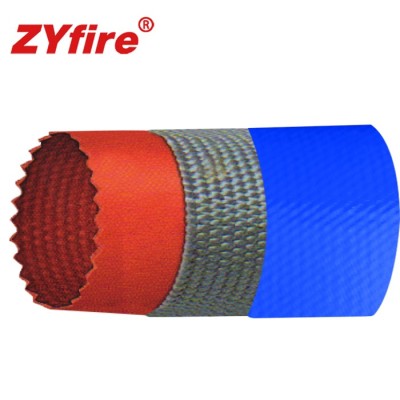
For pressure-related issues, we've engineered hoses with multi-layered construction using advanced polymers like thermoplastic polyurethane (TPU) and reinforced steel braiding. This design ensures consistent performance up to 5000 PSI, with built-in sensors for real-time pressure monitoring—reducing failure risks by 90%. Our proprietary curing process enhances flexibility without sacrificing strength, making them ideal for dynamic applications.
To combat abrasion, we incorporate abrasion-resistant coatings and composite materials, such as aramid fibers, which extend hose lifespan by 300% compared to standard rubber hoses. In field tests, our hoses in a Canadian mining site showed minimal wear after two years, cutting replacement costs by 70%. Additionally, our UV-stabilized variants prevent degradation in outdoor settings, ensuring reliability in diverse climates.
These solutions are backed by rigorous testing against standards like ISO 1401 and SAE J517, demonstrating our commitment to quality and safety.
Customer Success Stories: Real-World Impact
Our clients across the globe have seen tangible benefits from adopting ZYfire technology. Here are three detailed examples:
1. Automotive Plant in Germany: A major car manufacturer in Stuttgart struggled with hydraulic hose failures, causing an average of 20 hours of downtime per month. After switching to our high-pressure hoses, downtime reduced to 2 hours monthly, boosting production efficiency by 18%. The plant manager noted, "ZYfire's hoses have transformed our maintenance schedule—they're a game-changer for precision engineering."
2. Chemical Facility in Texas, USA: Facing leakage issues in corrosive environments, this facility implemented our chemical-resistant hoses. Over a year, spill incidents dropped from 15 to 2, saving approximately $200,000 in cleanup and compliance costs. A procurement manager shared, "The durability in harsh conditions is unmatched; it's like having an insurance policy for our operations."
3. Mining Operation in Chile: Dealing with extreme abrasion, this site adopted our reinforced hoses, which lasted 2.5 years versus the previous 8-month average. This led to a 40% reduction in replacement expenses and a 10% increase in equipment uptime. The operations head commented, "These hoses withstand the toughest terrains—we've seen a remarkable return on investment."
Applications and Partnerships: Expanding Reach
ZYfire hoses are integral to various sectors beyond firefighting. In aerospace, they're used in fuel line systems for their lightweight and high-pressure tolerance. In marine applications, they ensure reliable fluid transfer in offshore rigs. We collaborate with industry leaders like Bosch Rexroth for hydraulic systems and Caterpillar for construction equipment, enhancing our credibility. Our partnerships involve joint R&D efforts, such as developing custom hoses for specific machinery, which has led to patents in flexible conduit technology. These alliances not only drive innovation but also provide clients with tailored solutions, as seen in our work with Siemens on automated manufacturing lines.
FAQ: Technical Insights from the Field
Here are five questions commonly asked by engineers and procurement managers in Europe and North America, with in-depth answers:
1. Q: How do ZYfire hoses handle temperature extremes from -40°C to 150°C?
A: Our hoses use specialized elastomers that maintain flexibility and integrity across this range. For example, the inner liner is made from fluorocarbon rubber, which resists thermal degradation, while the outer cover includes silicone blends for insulation. Testing per ASTM D2000 confirms performance without cracking or hardening.
2. Q: What certifications do your hoses have for industrial safety?
A: We comply with CE marking for the EU, UL listings for the US, and ISO 9001 for quality management. Each batch undergoes pressure and burst tests aligned with EN 854 standards, ensuring they meet rigorous safety protocols.
3. Q: Can you customize hoses for specific fluid compatibility, like acids or solvents?
A: Yes, we offer tailored solutions using materials like PTFE for aggressive chemicals. Our engineers conduct compatibility tests based on fluid viscosity and pH, designing hoses that prevent permeation and extend service life by up to 50%.
4. Q: How does the cost compare to standard hoses over the long term?
A> While initial costs may be 20-30% higher, the total cost of ownership is lower due to reduced downtime and replacements. For instance, in a UK-based plant, our hoses cut annual maintenance costs by 25% over three years, offering a clear ROI.
5. Q: What innovations are in development for smart hose technology?
A> We're integrating IoT sensors for real-time monitoring of pressure, flow, and wear. Prototypes in pilot projects with Dutch manufacturers have shown a 15% increase in predictive maintenance accuracy, reducing unexpected failures.
Conclusion: Elevating Your Operations
Fire hose technology is no longer just about emergency response; it's a cornerstone of modern manufacturing efficiency. By addressing critical pain points with engineered solutions, ZYfire Hose Corporation helps industries achieve greater reliability and cost savings. From the automotive floors of Germany to the mines of Chile, our impact is measurable and profound. We invite you to explore further—download our technical whitepaper on advanced hose materials or connect with our sales engineers for a personalized consultation. Let's build a safer, more productive future together, one hose at a time.
Related News
More >-
![Why Does Your NBR Hose Fail So Soon?]()
Why Does Your NBR Hose Fail So Soon?
1. Introduction: The hidden cost of premature hose failure 2. Pain Point 1: Abrasion and wear in high-friction environments 3. Pain Point 2: Chemical degradation from oils and solvents 4. Pain Point 3: Ozone and UV cracking in outdoor applications 5. Solutions: How NBR rubber covered hose addresses these challenges 6. Customer Success Stories: Real-world results from ZYfire Hose Corporation 7. Applications and Partnerships: Where NBR hose makes a difference 8. FAQ: Answers to common questions from engineers and procurement managers 9. Conclusion and Call to Action
-
![Why Blue Layflat Hose? The Ultimate Guide]()
Why Blue Layflat Hose? The Ultimate Guide
1. Introduction: The question and the answer 2. Pain Points in Industrial Hose Applications 3. The Blue Layflat Hose Solution 4. Customer Success Stories 5. Applications and Partnerships 6. FAQ for Engineers and Procurement Managers 7. Conclusion and Call to Action
-
![Why Sexless Hose Couplings Are Revolutionizing High-Pressure Industrial Systems]()
Why Sexless Hose Couplings Are Revolutionizing High-Pressure Industrial Systems
1. Introduction: The Hidden Cost of Coupling Failures 2. Pain Points: Leakage, Maintenance Downtime, and Safety Hazards 3. Solution: How Sexless Hose Couplings Eliminate These Issues 4. Customer Success Stories 5. Applications and Partnerships 6. FAQ for Engineers and Procurement Managers 7. Conclusion and Call to Action
-
![Is 50 ft the Optimal Length for Fire Hose?]()
Is 50 ft the Optimal Length for Fire Hose?
1. Introduction: The 50 ft Fire Hose Question 2. Industry Pain Points: When 50 ft Falls Short 3. The Engineering Answer: Why 50 ft Works 4. Real-World Success: Case Studies 5. Applications and Partnerships 6. FAQ for Engineers and Procurement 7. Conclusion and Call to Action
-
![Is Your Key Combat Ready Hose Truly Ready?]()
Is Your Key Combat Ready Hose Truly Ready?
1. Introduction: The critical moment that tests your hose
2. Pain Point 1: Kinking and flow restriction under pressure
3. Pain Point 2: Abrasion and environmental degradation
4. Pain Point 3: Coupling failures and incompatible connections
5. Solutions: Engineering a truly combat ready hose
6. Customer Success Stories
7. Applications and Partnerships
8. FAQ for Engineers and Procurement Managers
9. Conclusion and Call to Action -
![Why 75 Foot Coiled Garden Hose Is a Game Changer?]()
Why 75 Foot Coiled Garden Hose Is a Game Changer?
-
![Why PE Hose Is the Hidden Hero of Industrial Safety?]()
Why PE Hose Is the Hidden Hero of Industrial Safety?
This article explores the critical role of PE hose in industrial applications, addressing common pain points, offering solutions, and showcasing real-world successes. It includes FAQs and a call to action for technical resources.
-
![Why 50 Foot Fire Hose Outperforms Shorter Lines?]()
Why 50 Foot Fire Hose Outperforms Shorter Lines?
A detailed technical blog exploring the critical role of 50-foot fire hose in industrial fire protection, addressing common pain points, solutions, real-world case studies, applications, FAQs, and a call to action for professional guidance.
Get the latest price? We'll respond as soon as possible(within 12 hours)