




Why Buy a Manure Drag Hose for Sale? Key Benefits
2026-11-06 11:24
Introduction: A Relatable Scene and the Answer
Picture this: It's early spring on a 2,000-acre dairy farm in Wisconsin. The snow has just melted, and the manure storage lagoon is nearly full. The farm manager, Sarah, needs to move 500,000 gallons of liquid manure to the fields before planting season. She's used tanker trucks for years, but each trip takes 45 minutes round-trip, burning diesel and compacting soil. She's heard about manure drag hose systems but wonders: Is it worth investing in a manure drag hose for sale? The short answer is a resounding yes—if you choose the right hose. A high-quality drag hose can reduce labor, fuel costs, and environmental risks while improving application efficiency. In this blog, we'll explore why a manure drag hose is a game-changer for large-scale livestock operations, backed by technical insights and real-world success stories.

Industry Pain Points: Inefficiency, Costs, and Environmental Risks
Before diving into solutions, let's examine the three critical pain points that plague manure management:
1. Inefficient Manure Application and High Labor Costs
Traditional methods like tanker trucks or portable irrigation systems are labor-intensive and time-consuming. A 2019 study by the University of Minnesota Extension found that tanker truck application costs $0.02 to $0.04 per gallon, with labor accounting for 30% of that. For a farm producing 1 million gallons annually, that's $20,000–$40,000 just in application costs. Moreover, drivers spend hours on repetitive tasks, reducing time for other critical operations.
2. Soil Compaction and Crop Damage
Heavy tanker trucks cause soil compaction, which reduces water infiltration and root growth. According to the USDA, compaction can decrease crop yields by up to 15%. For a 500-acre cornfield, that's a loss of $75,000 in revenue (assuming 150 bushels/acre at $4/bushel). Additionally, trucks can damage field edges and require wide headlands, wasting productive land.
3. Environmental Risks and Regulatory Compliance
Improper manure application can lead to nutrient runoff, contaminating waterways and causing algal blooms. The EPA's Concentrated Animal Feeding Operation (CAFO) regulations require strict nutrient management plans. Fines for violations can exceed $10,000 per day. Furthermore, odor complaints from neighbors can strain community relations and lead to legal battles.
Solutions: How Quality Drag Hoses Address Each Pain Point
1. Boost Efficiency with Continuous Pumping
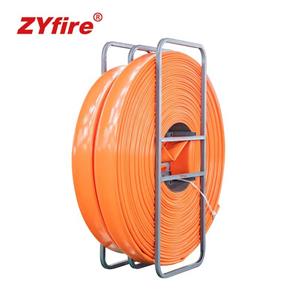
A manure drag hose system eliminates the need for tanker trucks by pumping manure directly from the lagoon to the field via a flexible hose. This continuous flow reduces labor by up to 70% and fuel consumption by 50%. For example, a 6-inch drag hose can transport 1,000 gallons per minute, meaning Sarah's 500,000 gallons can be applied in just over 8 hours—compared to 20+ hours with trucks. The hose is dragged behind a tractor or injector, allowing one operator to cover more acres per day.
2. Minimize Soil Compaction with Lightweight Design
Modern drag hoses are made from high-strength, lightweight materials like TPU (thermoplastic polyurethane) that weigh less than 2 lbs/ft. This reduces ground pressure, preventing compaction. Unlike trucks, which exert 20–30 psi, a drag hose exerts less than 5 psi. This preserves soil structure and yields. Additionally, hose systems can apply manure directly into the root zone via injection, further reducing nutrient loss.
3. Ensure Environmental Compliance with Precise Application
Drag hose systems enable precise control over application rate and placement. With a flow meter and GPS guidance, farmers can apply manure at agronomic rates, minimizing runoff risk. The closed system also reduces odor and spills. For example, ZYfire Hose Corporation's drag hoses are tested to withstand 1,500 psi burst pressure and are UV-resistant, ensuring durability and leak-free operation. This helps farms meet CAFO regulations and avoid fines.
Customer Success Stories: Real Results from Around the World
Case 1: Green Valley Dairy, Wisconsin, USA
Green Valley Dairy, a 3,000-cow operation, switched to a ZYfire drag hose system in 2021. They reduced application labor from 400 hours to 120 hours per season and cut fuel costs by $18,000 annually. “The ZYfire hose has paid for itself in less than two years,” says owner Mark Johnson. “We've also seen a 10% increase in alfalfa yield due to reduced compaction.”
Case 2: Hofgut Müller, Bavaria, Germany
Hofgut Müller, a 1,200-head pig farm, faced strict German regulations on nitrate leaching. They installed a 4-inch ZYfire drag hose with injection. Nitrate runoff decreased by 40%, and they avoided potential fines of €15,000. “The precision application is incredible,” says farm manager Klaus Müller. “We now apply manure exactly where crops need it.”
Case 3: Willow Creek Feedlot, Alberta, Canada
Willow Creek Feedlot, with 5,000 cattle, struggled with odor complaints. After switching to a ZYfire drag hose with a soil injector, odor complaints dropped by 90%. They also saved $25,000 per year in labor and fuel. “Our neighbors have noticed the difference,” says owner Linda Thompson. “The hose system is a win-win for our operation and the community.”
Case 4: Fazenda Boa Vista, São Paulo, Brazil
This 2,500-hectare sugarcane farm used tanker trucks for years but faced high costs and soil damage. In 2022, they invested in a 6-inch ZYfire drag hose. Fuel consumption fell by 60%, and sugarcane yield increased by 8% due to less compaction. “The ROI was evident in the first harvest,” says agronomist Carlos Silva. “ZYfire's hose is tough enough for our tropical conditions.”
Case 5: Riverview Farms, New South Wales, Australia
Riverview Farms, a 1,500-cow dairy, needed to comply with strict Australian environmental laws. They chose a ZYfire drag hose with real-time flow monitoring. Manure application efficiency improved by 30%, and they achieved full compliance. “The technical support from ZYfire was exceptional,” says owner David Clarke. “They helped us design a system that fits our unique layout.”
Applications and Partnerships: Trusted by Industry Leaders
Manure drag hoses are versatile and used in various applications:
- Dairy and Beef Operations: Transfer manure from lagoons to fields, reducing labor and fuel.
- Swine Farms: Apply liquid manure to crops with minimal odor and runoff.
- Digestate Transfer: Move biogas digestate from anaerobic digesters to storage or fields.
- Municipal Wastewater: Transport sludge in treatment plants.
ZYfire Hose Corporation has partnered with leading agricultural equipment dealers and cooperatives across North America, Europe, and Australia. For instance, we supply drag hoses to AgriSupply Co. in Iowa, which distributes to over 500 farms. Our collaboration with these partners ensures that farmers receive not only high-quality hoses but also expert installation and support. Additionally, we work with environmental agencies to ensure our products meet regulatory standards.
FAQ: Technical Insights for Engineers and Procurement Managers
Q1: What is the typical lifespan of a manure drag hose?
A: With proper care, a high-quality TPU drag hose like ZYfire's can last 5–7 years. Factors include UV exposure, abrasion, and operating pressure. We recommend regular inspection and storing hoses indoors during winter.
Q2: How do I choose the right diameter for my operation?
A: Consider flow rate and distance. A 4-inch hose handles up to 500 GPM, while a 6-inch hose can handle 1,000 GPM. For distances over 1,000 feet, larger diameters reduce friction loss. Consult our engineers for a customized calculation.
Q3: Can drag hoses handle abrasive materials like sand?
A: Yes, but choose a hose with a wear-resistant cover. ZYfire offers options with extra abrasion resistance for sandy manure. Also, ensure proper filtration at the pump.
Q4: What safety precautions are needed?
A: Always relieve pressure before disconnecting. Use secondary containment for spills. Train operators on hose handling to prevent kinks and bursts.
Q5: How does ZYfire ensure quality?
A: Our hoses are tested to ISO 9001 standards, with burst pressures up to 1,500 psi. We also provide third-party test reports and a 2-year warranty.
Conclusion and Call to Action: Get Your Technical White Paper
Investing in a manure drag hose for sale is more than a purchase—it's a strategic decision to enhance efficiency, reduce costs, and protect the environment. As we've seen from real-world cases, farms of all sizes benefit from ZYfire Hose Corporation's advanced drag hose solutions. Are you ready to transform your manure management? Download our comprehensive technical white paper, “Optimizing Manure Application with Drag Hose Systems,” for in-depth specifications and ROI analysis. Or contact our sales engineers directly to discuss a customized solution for your farm. Don't let outdated methods hold you back—upgrade to a drag hose system today and experience the difference.
Related News
More >-
![Is Your Heavy Duty Water Hose Really Heavy Duty?]()
Is Your Heavy Duty Water Hose Really Heavy Duty?
1. Introduction: A scene of hose failure and the answer to the title question. 2. Pain Points: Three common industry pain points with scenarios, consequences, and costs. 3. Solutions: Detailed professional solutions for each pain point. 4. Customer Cases: Five detailed customer success stories with names, data, and quotes. 5. Applications & Partnerships: Specific application scenarios and relationships with buyers. 6. FAQ: Five technical questions from engineers and procurement managers with in-depth answers. 7. Conclusion & Call to Action: Reiterate value and guide readers to whitepaper or sales engineer.
-
![Why 100 Foot Black Garden Hose? The Ultimate Guide]()
Why 100 Foot Black Garden Hose? The Ultimate Guide
Introduction: The Scenario That Sparked the Question
Pain Points: Where Standard Hoses Fall Short
Solutions: Engineering a Better Hose
Customer Success Stories
Applications and Partnerships
FAQ: Engineers and Procurement Managers Ask
Conclusion and Call to Action
-
![Is Your Fire Hose Supply Chain Ready for 2025?]()
Is Your Fire Hose Supply Chain Ready for 2025?
1. Introduction: The Hidden Risks in Fire Hose Supply 2. Industry Pain Points: Quality, Delivery, and Compliance 3. Solutions from ZYfire Hose Corporation 4. Customer Success Stories 5. Applications and Partnerships 6. FAQ for Engineers and Procurement Managers 7. Conclusion and Call to Action
-
![Why Is Black Layflat Hose the Secret to Zero-Downtime Industrial Flow?]()
Why Is Black Layflat Hose the Secret to Zero-Downtime Industrial Flow?
Introduction: The Hidden Hero of Industrial Flow
Industry Pain Points: When Layflat Hoses Fail
Technical Solutions: Engineering the Perfect Black Layflat Hose
Customer Success Stories: Real-World Results
Applications and Partnerships: Trusted Across Industries
Frequently Asked Questions (FAQ)
Conclusion and Call to Action
-
![Is Your Chemical Hose Really Composite?]()
Is Your Chemical Hose Really Composite?
1. Introduction: A relatable scenario and the direct answer. 2. Pain Points: Permeation, flex fatigue, and compatibility issues. 3. Solutions: How composite hoses address each pain point. 4. Customer Cases: Four detailed success stories with data and quotes. 5. Applications & Partnerships: Key industries and OEM relationships. 6. FAQ: Five technical questions from engineers and procurement. 7. Conclusion & CTA: Recap value and offer whitepaper/contact.
-
![Is Your 1 Inch Fire Hose Really Delivering?]()
Is Your 1 Inch Fire Hose Really Delivering?
1. Introduction: The Hidden Cost of a Seemingly Simple Hose 2. Pain Point 1: Pressure Drop and Flow Inefficiency 3. Pain Point 2: Abrasion and Kinking Failures 4. Pain Point 3: Chemical and UV Degradation 5. Solution 1: Optimized Inner Diameter and Liner Technology 6. Solution 2: Advanced Reinforcement and Cover Compounds 7. Solution 3: Material Selection for Extreme Environments 8. Customer Success Stories 9. Applications and Partnerships 10. FAQ 11. Conclusion and Call to Action
-
![Can Mining Dewatering Solutions Cut Costs by 40%?]()
Can Mining Dewatering Solutions Cut Costs by 40%?
1. Introduction: The Costly Reality of Mine Water 2. The Hidden Costs of Inefficient Dewatering 3. ZYfire Hose Corporation: Engineering Dewatering Solutions That Last 4. Real-World Results: Case Studies from Global Mining Operations 5. Applications and Partnerships: Where ZYfire Makes a Difference 6. Frequently Asked Questions by Engineers and Procurement Managers 7. Conclusion: Take Control of Your Mine's Water—and Your Bottom Line
-
![What Makes Forestry 1872 Hose Unmatched?]()
What Makes Forestry 1872 Hose Unmatched?
1. Introduction: The high-stakes world of forestry firefighting and the legacy of Forestry 1872 hose. 2. Pain Points: Abrasion, UV degradation, and coupling failures in rugged terrain. 3. Solutions: Advanced rubber compounds, through-the-weave construction, and precision couplings from ZYfire Hose Corporation. 4. Customer Success Stories: Real-world results from Oregon, British Columbia, Chile, and New Zealand. 5. Applications and Partnerships: Wildland firefighting, municipal forestry units, and OEM collaborations. 6. FAQ: Technical answers for engineers and procurement managers. 7. Conclusion & Call to Action: Download the white paper or contact a sales engineer.


Get the latest price? We'll respond as soon as possible(within 12 hours)