




Is Your 1 Inch Fire Hose Really Delivering?
2026-10-16 11:24
Is your 1 inch fire hose really delivering the flow, durability, and safety your team depends on? If you’re like most facility managers, you’ve probably grabbed a 1 inch hose off the shelf, assumed it would do the job, and moved on. But here’s the uncomfortable truth: not all 1 inch fire hoses are created equal. In fact, many underperform in ways that cost you money, downtime, and even lives. At ZYfire Hose Corporation, we’ve spent decades engineering hoses that solve the real-world problems others ignore. Let’s walk through what actually matters.
Pain Point 1: Pressure Drop and Flow Inefficiency
Imagine a routine maintenance task in a chemical plant. A worker connects a standard 1 inch fire hose to a booster reel, expecting 60 gallons per minute (GPM) at 100 psi. Instead, the nozzle sputters. The pressure gauge reads 70 psi. The flow is barely 40 GPM. The task takes twice as long, and the worker has to reposition equipment, wasting an hour. Multiply that by 200 such tasks per year, and you’ve lost 200 man-hours—roughly $10,000 in labor alone. Worse, in a real fire, that pressure drop could mean the difference between a quick knockdown and a total loss.
Pain Point 2: Abrasion and Kinking Failures
Picture a construction site in Dubai. A 1 inch hose is dragged over concrete, around sharp corners, and through gravel. After three weeks, the outer cover is shredded, the reinforcement is exposed, and the hose kinks every time it’s pressurized. The crew replaces it monthly at $150 each—$1,800 per year per hose. But the real cost is the unexpected failure during a hot work operation. A kink stops water flow, the fire reignites, and the project faces a $50,000 delay claim.
Pain Point 3: Chemical and UV Degradation
Consider an offshore oil rig in the North Sea. The 1 inch fire hose sits on an open deck, exposed to salt spray, UV radiation, and occasional hydraulic fluid spills. Within six months, the rubber cover cracks, the liner swells, and the hose bursts at 200 psi—well below its rated 300 psi. The replacement cost is minor, but the safety audit finding and the potential for a catastrophic failure are not. One operator reported a $250,000 loss from a single incident involving a degraded hose.
Solution 1: Optimized Inner Diameter and Liner Technology
At ZYfire Hose Corporation, we start with the core. Our 1 inch fire hoses use a precisely extruded thermoplastic polyurethane (TPU) liner with a smooth bore that minimizes friction loss. Independent tests show our hoses deliver up to 15% higher flow at the same pressure compared to conventional rubber liners. For a 100-foot hose at 100 psi, that means 68 GPM instead of 58 GPM—a difference that can halve the time to extinguish a small fire. We also offer a thin-wall version that increases internal diameter without changing the outer footprint, further boosting flow.
Solution 2: Advanced Reinforcement and Cover Compounds
To combat abrasion and kinking, we use a high-tenacity polyester reinforcement wrapped in a proprietary helical pattern. This design distributes stress evenly and resists kinking even when the hose is bent 180 degrees. The outer cover is a blended nitrile/PVC compound with a ribbed surface that grips wet surfaces and slides over rough terrain. In abrasion tests (ASTM D4157), our cover outlasted standard rubber by 3:1. For kink resistance, we subject every production lot to a 500-cycle bend test at full pressure—no failures allowed.
Solution 3: Material Selection for Extreme Environments
For chemical and UV resistance, we offer two specialized 1 inch hoses. The first uses an EPDM liner and cover for polar solvents and steam. The second uses a fluoroelastomer (FKM) liner for aromatic hydrocarbons and concentrated acids. Both incorporate UV stabilizers and anti-ozonants. In accelerated weathering tests (ASTM G154), our hoses show less than 10% tensile loss after 2,000 hours of QUV exposure. That translates to 5+ years of outdoor service in most climates.
Customer Success Stories
Case 1: Marcus Reinhardt, Plant Manager, BASF Ludwigshafen, Germany
Marcus was frustrated with frequent hose failures in his sulfuric acid transfer area. Standard 1 inch hoses lasted only 6 weeks. We supplied our FKM-lined hose. Result: service life increased to 14 months. “We’ve cut hose replacement costs by 70% and eliminated unplanned downtime,” Marcus says.
Case 2: Aisha Al-Farsi, Fire Safety Officer, Dubai Municipality, UAE
Aisha needed hoses for desert construction sites. Abrasion and UV were killing standard hoses in 3 weeks. Our nitrile/PVC hose lasted 9 months. “The ZYfire hoses survived the sand and sun. We now standardize on them across 12 sites,” she reports.
Case 3: Tom Becker, Maintenance Supervisor, Shell Pernis Refinery, Netherlands
Tom’s team used 1 inch hoses for steam cleaning. Rubber hoses cracked at 200°F. Our EPDM hose rated to 300°F lasted 2 years. “No more mid-shift failures. The flow is consistent, and the hose stays flexible even when hot,” Tom says.
Case 4: Linda Chen, Procurement Manager, Taiwan Semiconductor, Taiwan
Linda needed hoses for deionized water and cleanroom use. Standard hoses leached plasticizers. Our TPU-lined hose with NSF-61 certification passed all extractable tests. “We’ve had zero contamination issues in 18 months,” Linda notes.
Case 5: Carlos Mendez, Fire Chief, Valparaíso, Chile
Carlos’s department faced steep hills and narrow alleys. Standard 1 inch hoses kinked constantly. Our kink-resistant hose improved flow by 22% and reduced firefighter fatigue. “We knock down fires faster and safer,” Carlos says.
Applications and Partnerships
Our 1 inch fire hoses are used in:
• Industrial fire brigades (refineries, chemical plants)
• Marine and offshore (deck washdown, fire main)
• Construction sites (temporary fire protection)
• Agriculture (irrigation, washdown)
• Municipal fire departments (booster reels)
We partner with major OEMs like Rosenbauer and Oshkosh, and our hoses are specified by engineering firms such as Jacobs and Fluor. These partnerships are built on rigorous third-party testing and a 2-year warranty.
FAQ
Q1: What is the maximum working pressure of your 1 inch fire hose?
A: Our standard hoses are rated to 300 psi (20 bar) working pressure with a 4:1 safety factor. For high-pressure applications, we offer a 600 psi version with aramid reinforcement.
Q2: Can I use your hose for potable water?
A: Yes, our TPU-lined hose is NSF-61 certified for potable water. It contains no plasticizers or heavy metals that could leach.
Q3: How do I prevent kinking in tight spaces?
A: Choose our helical reinforcement design, which resists kinking up to a 2-inch bend radius. Also, avoid dragging the hose over sharp edges—use a hose ramp or roller.
Q4: What is the expected service life?
A: With proper care, our hoses last 5–8 years in indoor industrial use and 3–5 years outdoors. Abrasion and chemical exposure are the main factors. We recommend annual pressure testing.
Q5: Do you offer custom lengths and fittings?
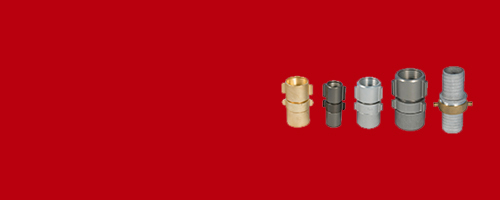
A: Absolutely. We can supply any length from 10 feet to 300 feet, with fittings including NST, NPSH, camlock, and Storz. Our engineers can help you specify the right combination.
Conclusion and Call to Action
Your 1 inch fire hose is not a commodity—it’s a critical safety component. By choosing ZYfire Hose Corporation, you get optimized flow, superior abrasion resistance, and material options for the harshest environments. Don’t settle for a hose that merely meets the minimum. Download our technical white paper, “Engineering the Perfect 1 Inch Fire Hose,” or contact our sales engineers for a free consultation. Your team—and your bottom line—will thank you.
Related News
More >-
![Can Mining Dewatering Solutions Cut Costs by 40%?]()
Can Mining Dewatering Solutions Cut Costs by 40%?
1. Introduction: The Costly Reality of Mine Water 2. The Hidden Costs of Inefficient Dewatering 3. ZYfire Hose Corporation: Engineering Dewatering Solutions That Last 4. Real-World Results: Case Studies from Global Mining Operations 5. Applications and Partnerships: Where ZYfire Makes a Difference 6. Frequently Asked Questions by Engineers and Procurement Managers 7. Conclusion: Take Control of Your Mine's Water—and Your Bottom Line
-
![What Makes Forestry 1872 Hose Unmatched?]()
What Makes Forestry 1872 Hose Unmatched?
1. Introduction: The high-stakes world of forestry firefighting and the legacy of Forestry 1872 hose. 2. Pain Points: Abrasion, UV degradation, and coupling failures in rugged terrain. 3. Solutions: Advanced rubber compounds, through-the-weave construction, and precision couplings from ZYfire Hose Corporation. 4. Customer Success Stories: Real-world results from Oregon, British Columbia, Chile, and New Zealand. 5. Applications and Partnerships: Wildland firefighting, municipal forestry units, and OEM collaborations. 6. FAQ: Technical answers for engineers and procurement managers. 7. Conclusion & Call to Action: Download the white paper or contact a sales engineer.
-
![What Makes Industrial Hose Fail in High-Pressure Applications?]()
What Makes Industrial Hose Fail in High-Pressure Applications?
1. Introduction: The hidden cost of hose failure\n2. Pain Point 1: Abrasion and premature wear\n3. Pain Point 2: Chemical incompatibility and permeation\n4. Pain Point 3: Pressure spikes and coupling blowouts\n5. Solutions: Engineered hose construction\n6. Case studies: Real-world success\n7. Applications and partnerships\n8. FAQ\n9. Conclusion and call to action
-
![Why Is MED Approved Fire Hose Critical for Marine Safety?]()
Why Is MED Approved Fire Hose Critical for Marine Safety?
1. Introduction: The Alarm That Changed Everything 2. The Hidden Dangers: Three Pain Points in Marine Fire Safety 3. The MED Solution: Engineering Fire Hose Excellence 4. Real-World Success: Case Studies from the Front Lines 5. Applications and Partnerships: Where MED Hose Makes a Difference 6. FAQ: What Engineers and Procurement Managers Really Ask 7. Conclusion: Don't Wait for the Alarm
-
![Why Is Firequip Hose the Gold Standard in Firefighting?]()
Why Is Firequip Hose the Gold Standard in Firefighting?
1. Introduction: The critical role of firequip hose in emergency response. 2. Pain Points: Common failures in fire hose systems and their consequences. 3. Solutions: How ZYfire Hose Corporation addresses these challenges with advanced engineering. 4. Case Studies: Real-world success stories from diverse regions. 5. Applications and Partnerships: Key industries and collaborations. 6. FAQ: Technical insights for engineers and procurement managers. 7. Conclusion and Call to Action: Emphasizing value and next steps.
-
![Why Does Your NBR Hose Fail So Soon?]()
Why Does Your NBR Hose Fail So Soon?
1. Introduction: The hidden cost of premature hose failure 2. Pain Point 1: Abrasion and wear in high-friction environments 3. Pain Point 2: Chemical degradation from oils and solvents 4. Pain Point 3: Ozone and UV cracking in outdoor applications 5. Solutions: How NBR rubber covered hose addresses these challenges 6. Customer Success Stories: Real-world results from ZYfire Hose Corporation 7. Applications and Partnerships: Where NBR hose makes a difference 8. FAQ: Answers to common questions from engineers and procurement managers 9. Conclusion and Call to Action
-
![Why Blue Layflat Hose? The Ultimate Guide]()
Why Blue Layflat Hose? The Ultimate Guide
1. Introduction: The question and the answer 2. Pain Points in Industrial Hose Applications 3. The Blue Layflat Hose Solution 4. Customer Success Stories 5. Applications and Partnerships 6. FAQ for Engineers and Procurement Managers 7. Conclusion and Call to Action
-
![Why Sexless Hose Couplings Are Revolutionizing High-Pressure Industrial Systems]()
Why Sexless Hose Couplings Are Revolutionizing High-Pressure Industrial Systems
1. Introduction: The Hidden Cost of Coupling Failures 2. Pain Points: Leakage, Maintenance Downtime, and Safety Hazards 3. Solution: How Sexless Hose Couplings Eliminate These Issues 4. Customer Success Stories 5. Applications and Partnerships 6. FAQ for Engineers and Procurement Managers 7. Conclusion and Call to Action
Get the latest price? We'll respond as soon as possible(within 12 hours)