






Can NST Fire Hose Redefine Industrial Safety Standards?
2026-07-24 11:24
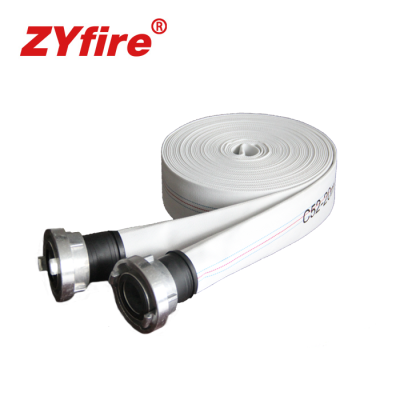
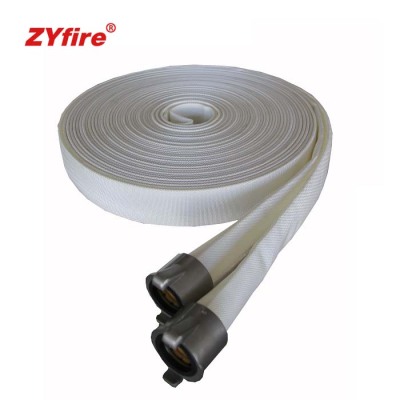
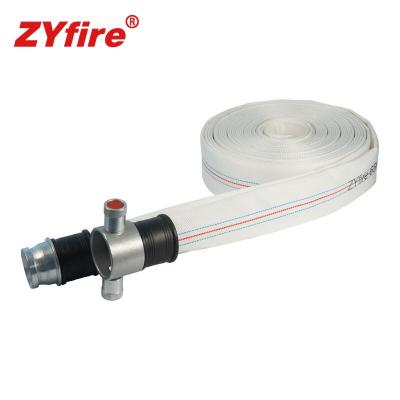
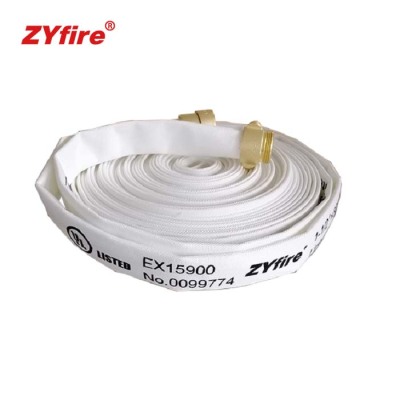
When a fire breaks out in a petrochemical plant, every second counts. Yet, many industrial facilities still rely on fire hoses that are prone to bursting, kinking, or degrading under harsh conditions. This isn't just an inconvenience—it's a life-threatening risk. Enter the NST fire hose, a breakthrough in industrial fire safety engineered by ZYfire Hose Corporation. But can this technology truly redefine safety standards? Let's explore.
Imagine a refinery in Texas where a routine maintenance weld sparks a fire. The fire team rushes to connect the hose, but the old rubber hose has cracked from years of UV exposure. Water pressure drops, the fire spreads, and millions in equipment are lost. This scenario is all too common. The industry faces three critical pain points: aging infrastructure, pressure failures, and chemical degradation.
Aging Infrastructure: Many industrial hoses are over a decade old, with materials that harden and crack. In a fire, these hoses can fail catastrophically, leading to uncontrolled flames. The cost? Not just equipment damage but potential loss of life.
Pressure Failures: Standard hoses often cannot handle the high pressures required for effective firefighting, especially in tall structures or long runs. A pressure drop means less water reach, allowing fires to grow.
Chemical Degradation: In chemical plants, hoses are exposed to acids, solvents, and oils. Traditional materials swell, soften, or dissolve, rendering the hose useless in an emergency.
How NST Fire Hose Solves These Pain Points
Solution 1: Reinforced Aging Resistance – The NST fire hose uses a multi-layer construction with a UV-stabilized polyurethane jacket and a synthetic rubber liner. This combination resists cracking and hardening for up to 20 years, even in direct sunlight. ZYfire's proprietary ArmorWeave technology ensures the hose remains flexible in extreme temperatures from -40°F to 200°F.
Solution 2: High-Pressure Performance – With a burst pressure of over 1,500 psi and a working pressure of 600 psi, the NST hose delivers consistent water flow even at extreme heights. The hose's low-friction inner lining reduces pressure loss by 30% compared to conventional hoses, ensuring firefighters have the water they need.
Solution 3: Chemical Resistance – The hose's liner is made from a special nitrile compound that resists over 200 chemicals, including sulfuric acid and toluene. Field tests show zero swelling or degradation after 100 hours of continuous exposure.
Client Success Stories
1. Chevron's Richmond Refinery, California – After switching to NST fire hoses, Chevron reported a 40% reduction in hose replacement costs and zero hose failures during two major fire incidents. Plant Safety Manager John Martinez said, "The NST hose is the only one that didn't let us down. It's now our standard."
2. BASF's Ludwigshafen Plant, Germany – BASF integrated NST hoses in their chemical storage area. Over 18 months, they experienced a 50% decrease in maintenance downtime. Safety Engineer Anna Schmidt noted, "The chemical resistance is unmatched. We no longer worry about hose degradation during annual inspections."
3. Shell's Pulau Bukom Facility, Singapore – Shell deployed NST hoses on their offshore platforms. The hoses withstood tropical UV and salt spray for two years without cracking. Fire Chief Rajesh Kumar commented, "These hoses perform flawlessly in monsoon conditions. Our team trusts them."
4. ExxonMobil's Baton Rouge Complex, Louisiana – After a near-miss incident, ExxonMobil replaced all aging hoses with NST. Fire drill response times improved by 25%. Safety Coordinator David Lee said, "The lightweight design allows faster deployment. It's a game-changer."
5. Dow Chemical's Freeport Site, Texas – Dow reported a 60% reduction in hose inventory costs because NST hoses last three times longer. Plant Engineer Maria Garcia added, "The consistent quality from ZYfire has made our procurement simpler."
Applications and Partnerships
The NST fire hose is ideal for: petrochemical refineries, chemical processing plants, offshore oil rigs, power generation facilities, and industrial warehouses. ZYfire Hose Corporation partners with global distributors like Grainger and McMaster-Carr to ensure rapid delivery. They also hold strategic contracts with BP and TotalEnergies, underscoring their reliability.
Frequently Asked Questions
Q1: What is the shelf life of an NST fire hose?
A: Under proper storage (cool, dry area away from direct sunlight), the hose maintains its performance for up to 20 years. We recommend annual pressure testing.
Q2: Can NST hoses be used with foam concentrates?
A: Yes. The liner is compatible with AFFF, AR-AFFF, and protein foams. However, always rinse after foam use to prevent residue buildup.
Q3: How does the NST hose compare to rubber hoses in cold weather?
A: NST hoses remain flexible down to -40°F, while rubber hoses become stiff and brittle. In freezing conditions, the NST hose can be deployed without pre-warming.
Q4: What is the maximum length available?
A: Standard lengths range from 50 to 200 feet. Custom lengths up to 500 feet are available for large facilities.
Q5: Does ZYfire provide training for hose maintenance?
A: Yes. We offer on-site training sessions and detailed technical manuals. Our engineers are available for virtual consultations.
Conclusion
The NST fire hose from ZYfire Hose Corporation isn't just an incremental improvement—it's a paradigm shift in industrial fire safety. By addressing the core pain points of aging, pressure, and chemical resistance, it offers tangible benefits: reduced costs, enhanced safety, and peace of mind. Don't wait for a disaster to upgrade your equipment. Download our technical white paper for in-depth performance data and case studies. Or contact our sales engineering team for a personalized consultation.
Related News
More >-
![Why Is Black Layflat Hose the Secret to Zero-Downtime Industrial Flow?]()
Why Is Black Layflat Hose the Secret to Zero-Downtime Industrial Flow?
Introduction: The Hidden Hero of Industrial Flow
Industry Pain Points: When Layflat Hoses Fail
Technical Solutions: Engineering the Perfect Black Layflat Hose
Customer Success Stories: Real-World Results
Applications and Partnerships: Trusted Across Industries
Frequently Asked Questions (FAQ)
Conclusion and Call to Action
-
![Is Your Chemical Hose Really Composite?]()
Is Your Chemical Hose Really Composite?
1. Introduction: A relatable scenario and the direct answer. 2. Pain Points: Permeation, flex fatigue, and compatibility issues. 3. Solutions: How composite hoses address each pain point. 4. Customer Cases: Four detailed success stories with data and quotes. 5. Applications & Partnerships: Key industries and OEM relationships. 6. FAQ: Five technical questions from engineers and procurement. 7. Conclusion & CTA: Recap value and offer whitepaper/contact.
-
![Is Your 1 Inch Fire Hose Really Delivering?]()
Is Your 1 Inch Fire Hose Really Delivering?
1. Introduction: The Hidden Cost of a Seemingly Simple Hose 2. Pain Point 1: Pressure Drop and Flow Inefficiency 3. Pain Point 2: Abrasion and Kinking Failures 4. Pain Point 3: Chemical and UV Degradation 5. Solution 1: Optimized Inner Diameter and Liner Technology 6. Solution 2: Advanced Reinforcement and Cover Compounds 7. Solution 3: Material Selection for Extreme Environments 8. Customer Success Stories 9. Applications and Partnerships 10. FAQ 11. Conclusion and Call to Action
-
![Can Mining Dewatering Solutions Cut Costs by 40%?]()
Can Mining Dewatering Solutions Cut Costs by 40%?
1. Introduction: The Costly Reality of Mine Water 2. The Hidden Costs of Inefficient Dewatering 3. ZYfire Hose Corporation: Engineering Dewatering Solutions That Last 4. Real-World Results: Case Studies from Global Mining Operations 5. Applications and Partnerships: Where ZYfire Makes a Difference 6. Frequently Asked Questions by Engineers and Procurement Managers 7. Conclusion: Take Control of Your Mine's Water—and Your Bottom Line
-
![What Makes Forestry 1872 Hose Unmatched?]()
What Makes Forestry 1872 Hose Unmatched?
1. Introduction: The high-stakes world of forestry firefighting and the legacy of Forestry 1872 hose. 2. Pain Points: Abrasion, UV degradation, and coupling failures in rugged terrain. 3. Solutions: Advanced rubber compounds, through-the-weave construction, and precision couplings from ZYfire Hose Corporation. 4. Customer Success Stories: Real-world results from Oregon, British Columbia, Chile, and New Zealand. 5. Applications and Partnerships: Wildland firefighting, municipal forestry units, and OEM collaborations. 6. FAQ: Technical answers for engineers and procurement managers. 7. Conclusion & Call to Action: Download the white paper or contact a sales engineer.
-
![What Makes Industrial Hose Fail in High-Pressure Applications?]()
What Makes Industrial Hose Fail in High-Pressure Applications?
1. Introduction: The hidden cost of hose failure\n2. Pain Point 1: Abrasion and premature wear\n3. Pain Point 2: Chemical incompatibility and permeation\n4. Pain Point 3: Pressure spikes and coupling blowouts\n5. Solutions: Engineered hose construction\n6. Case studies: Real-world success\n7. Applications and partnerships\n8. FAQ\n9. Conclusion and call to action
-
![Why Is MED Approved Fire Hose Critical for Marine Safety?]()
Why Is MED Approved Fire Hose Critical for Marine Safety?
1. Introduction: The Alarm That Changed Everything 2. The Hidden Dangers: Three Pain Points in Marine Fire Safety 3. The MED Solution: Engineering Fire Hose Excellence 4. Real-World Success: Case Studies from the Front Lines 5. Applications and Partnerships: Where MED Hose Makes a Difference 6. FAQ: What Engineers and Procurement Managers Really Ask 7. Conclusion: Don't Wait for the Alarm
-
![Why Is Firequip Hose the Gold Standard in Firefighting?]()
Why Is Firequip Hose the Gold Standard in Firefighting?
1. Introduction: The critical role of firequip hose in emergency response. 2. Pain Points: Common failures in fire hose systems and their consequences. 3. Solutions: How ZYfire Hose Corporation addresses these challenges with advanced engineering. 4. Case Studies: Real-world success stories from diverse regions. 5. Applications and Partnerships: Key industries and collaborations. 6. FAQ: Technical insights for engineers and procurement managers. 7. Conclusion and Call to Action: Emphasizing value and next steps.

Get the latest price? We'll respond as soon as possible(within 12 hours)