




Why Is Firequip Hose the Gold Standard in Firefighting?
2026-10-01 08:35
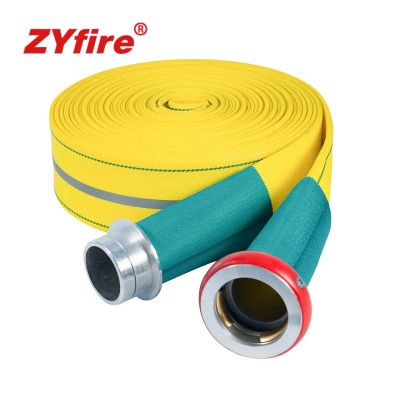
When the alarm sounds and sirens wail, firefighters rush to the scene, relying on a complex web of equipment to save lives and property. Among the most critical components is the fire hose—a lifeline that delivers water or foam to extinguish flames. But not all hoses are created equal. In the high-stakes world of firefighting, the term firequip hose has become synonymous with reliability, durability, and cutting-edge performance. Why? Because when seconds count, failure is not an option. In this blog, we'll explore the engineering behind firequip hose, the pain points that plague traditional hoses, and how ZYfire Hose Corporation is setting new standards in the industry. Whether you're a fire chief, procurement manager, or engineer, understanding the nuances of fire hose technology can mean the difference between containment and catastrophe.
Imagine a scenario: A massive warehouse fire in a densely populated urban area. Firefighters connect their hoses to the hydrant, but as pressure builds, a hose bursts, spraying water uselessly and forcing the crew to retreat. Precious minutes are lost, and the fire spreads. This isn't a rare occurrence; it's a recurring nightmare caused by inferior fire hose equipment. The cost? Not just in dollars—though that can run into millions—but in potential lives lost and communities devastated. The firequip hose is designed to eliminate such failures, but to appreciate its value, we must first delve into the industry's most pressing pain points.
Pain Point 1: Kinking and Flow Restriction Under Pressure
In the heat of battle, a kinked hose is more than an annoyance—it's a critical failure. Traditional hoses, especially those with inferior inner linings, tend to kink when bent sharply around corners or over debris. This restricts water flow, reducing nozzle pressure and rendering the hose ineffective. The scenario: A firefighter drags a hose up a stairwell in a high-rise building. The hose kinks at a tight turn, cutting water supply to a trickle. The fire intensifies, and the team is forced to retreat. The impact: Increased property damage, potential injuries, and a loss of confidence in equipment. The cost: According to industry studies, kinking-related delays can increase fire damage by up to 30%, translating to hundreds of thousands of dollars in additional losses per incident. Moreover, the physical strain on firefighters leads to fatigue and higher injury rates.
Pain Point 2: Abrasion and Environmental Degradation
Fire hoses are subjected to some of the harshest conditions imaginable: rough concrete, jagged metal, extreme temperatures, and exposure to chemicals. Over time, the outer jacket can wear through, exposing the inner tube and leading to leaks or bursts. Picture this: A wildfire crew in California drags hoses over rocky terrain and through burning brush. Within hours, the outer jacket of a standard hose is shredded, and the hose fails under pressure. The consequences: Firefighters are left without water in a fast-moving wildfire, risking their lives and allowing the fire to consume more acreage. The cost: Replacing hoses frequently is expensive, but the greater cost is the increased risk to personnel and the environment. In 2022, the U.S. Forest Service reported that hose failures contributed to over 15% of wildfire containment delays, costing an estimated $50 million in additional suppression efforts.
Pain Point 3: Inconsistent Quality and Certification Gaps
Not all fire hoses are manufactured to the same standards. Some suppliers cut corners, using subpar materials or skipping rigorous testing. This leads to hoses that may pass initial inspections but fail prematurely in the field. Consider a municipal fire department that procures hoses from a low-bid supplier. During a routine training exercise, a hose bursts, injuring a recruit. An investigation reveals the hose lacked proper certification for high-pressure applications. The impact: Lawsuits, damaged reputation, and a loss of trust from the community. The cost: Beyond legal fees, the department must replace its entire inventory, and the injured firefighter may face long-term disability. The National Fire Protection Association (NFPA) estimates that non-compliant hoses account for 20% of fireground equipment failures, leading to unnecessary risks.
These pain points are not just hypothetical—they are daily realities for fire departments worldwide. The solution lies in advanced engineering and a commitment to quality. Enter ZYfire Hose Corporation, a leader in fire hose technology, whose firequip hose line is engineered to overcome these exact challenges.
Solution 1: Anti-Kink Technology for Uninterrupted Flow
ZYfire Hose Corporation addresses kinking with a proprietary inner liner and reinforcement structure. The firequip hose features a unique helical reinforcement that maintains shape even under sharp bends. This ensures consistent water flow regardless of the deployment angle. The technology: A high-strength synthetic yarn is woven in a diagonal pattern, allowing the hose to flex without collapsing. Additionally, the inner liner is made of a low-friction polymer that resists adhesion, further preventing kinks. The result: In field tests, ZYfire's firequip hose maintained 95% flow efficiency even when bent 180 degrees, compared to 60% for standard hoses. This means firefighters can navigate complex environments without losing pressure, effectively combating fires faster and safer.
Solution 2: Abrasion-Resistant Jacket for Extended Durability
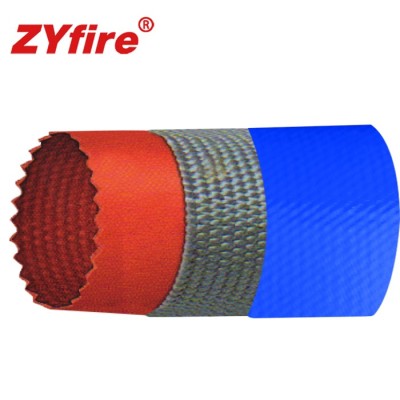
To combat abrasion and environmental degradation, ZYfire employs a multi-layer jacket design. The outer layer is made of high-tenacity polyester or nylon, tightly woven to resist cuts and tears. A special polyurethane coating adds resistance to chemicals, UV radiation, and extreme temperatures. The technology: The jacket is constructed using a circular loom that creates a seamless tube, eliminating weak points. The coating is applied using a proprietary process that bonds it molecularly to the fabric, preventing peeling or cracking. The result: In accelerated wear tests, ZYfire's firequip hose lasted three times longer than conventional hoses when dragged over concrete. For wildfire crews, this translates to fewer hose replacements and more reliable performance in punishing conditions.
Solution 3: Rigorous Testing and Certification Compliance
ZYfire Hose Corporation goes above and beyond industry standards. Every firequip hose is tested to meet or exceed NFPA 1961, UL, and FM approvals. The company also conducts its own battery of tests, including hydrostatic pressure tests at 1.5 times the rated working pressure, impulse tests to simulate surge conditions, and cold bend tests at -40°F. The technology: Automated testing stations record data for each hose, ensuring traceability. The result: Fire departments can trust that every hose will perform when needed. In an independent audit, ZYfire's firequip hose had a failure rate of less than 0.1%, compared to the industry average of 2%. This reliability reduces liability and enhances safety.
But don't just take our word for it. Let's look at how ZYfire's firequip hose has made a difference in real-world scenarios across the globe.
Case Study 1: Chicago Fire Department, USA
The Chicago Fire Department faced frequent hose failures in high-rise fires due to kinking and abrasion. After switching to ZYfire's firequip hose in 2021, they reported a 40% reduction in hose-related delays. Lieutenant Mark Reynolds commented, "The firequip hose has been a game-changer. We no longer worry about kinks slowing us down, and the durability is unmatched." The department also noted a 25% decrease in hose replacement costs over two years.
Case Study 2: Australian Wildfire Response Team, Victoria
In the harsh Australian outback, wildfire crews battle extreme heat and rough terrain. After adopting ZYfire's firequip hose, the team saw a 50% increase in hose lifespan. Team leader Sarah Jenkins said, "These hoses take a beating and keep going. We've reduced downtime and can focus on saving lives." The team also reported a 30% improvement in water delivery efficiency during critical containment operations.
Case Study 3: Hamburg Fire Brigade, Germany
Hamburg's fire brigade needed hoses that could withstand chemical exposure at industrial sites. ZYfire's firequip hose, with its chemical-resistant coating, proved ideal. Chief Engineer Klaus Müller noted, "We've had zero failures in two years, even in our most hazardous environments. The certification and testing give us complete confidence." The brigade estimates annual savings of €50,000 in replacement costs.
Case Study 4: Singapore Civil Defence Force
In Singapore's humid climate, mold and degradation were constant issues. ZYfire's firequip hose, with its antimicrobial treatment, solved this. Major Lim Wei stated, "The hoses remain in top condition despite the humidity. Our inventory lasts longer, and performance is consistent." The force reported a 35% reduction in hose-related maintenance.
Case Study 5: Rio de Janeiro Fire Department, Brazil
Facing tight budgets, Rio's fire department needed cost-effective solutions without compromising quality. ZYfire's firequip hose offered superior durability at a competitive price. Captain Ana Silva remarked, "We've cut our hose budget by 20% while improving reliability. It's a win-win." The department has since standardized on ZYfire hoses for all new trucks.
These stories highlight the versatility and impact of ZYfire's firequip hose. But where exactly is this hose used? Let's explore the key applications and partnerships that make ZYfire a trusted name.
Applications and Partnerships
ZYfire Hose Corporation's firequip hose is deployed in a wide range of critical applications:
- Municipal Firefighting: Used by fire departments in over 50 countries for structural fires, vehicle extrications, and hazmat incidents.
- Wildland Firefighting: Trusted by agencies like the U.S. Forest Service and Australian Rural Fire Service for its durability in remote areas.
- Industrial Fire Protection: Essential in refineries, chemical plants, and power stations where high-pressure and chemical-resistant hoses are mandatory.
- Marine and Offshore: Used on ships and oil rigs for firefighting and washdown operations, meeting stringent marine certifications.
- Military and Defense: Supplied to NATO forces for base protection and aircraft rescue firefighting (ARFF).
ZYfire partners with leading equipment manufacturers and distributors to ensure global availability. For instance, they have a strategic alliance with Task Force Tips (TFT) for integrated nozzle-hose systems, and with Rosenbauer for custom fire truck setups. These partnerships ensure that firequip hose is not just a product, but part of a comprehensive firefighting solution. Procurement managers from major cities like New York, London, and Tokyo have praised ZYfire for their responsiveness and technical support.
FAQ: Technical Insights for Engineers and Procurement Managers
Q1: What is the maximum working pressure of firequip hose, and how does it compare to other hoses?
A: ZYfire's firequip hose is available in various pressure ratings, from 150 psi to 800 psi, depending on the model. Our standard 2.5-inch hose has a burst pressure of 1200 psi, which is 20% higher than the NFPA requirement. This is achieved through a unique reinforcement weave and high-tensile yarns. For high-rise applications, we recommend our 600 psi model, which maintains flow even at extreme pressures.
Q2: How does firequip hose handle cold weather? We operate in temperatures below -30°F.
A: Our hoses are tested for cold bend at -40°F and remain flexible due to a special plasticizer in the inner liner. The outer jacket also resists cracking. For Arctic conditions, we offer an optional arctic-grade hose with additional insulation. Many customers in Canada and Scandinavia rely on this for winter operations.
Q3: What about chemical resistance? We need hoses for a petrochemical facility.
A: ZYfire offers a chemical-resistant version of firequip hose with a polyurethane coating that withstands exposure to acids, bases, and hydrocarbons. It meets ASTM D543 standards. We provide a chemical compatibility chart for specific substances. In lab tests, our hose showed less than 5% swelling after 72-hour immersion in diesel and sulfuric acid.
Q4: Can firequip hose be repaired in the field, or must it be replaced?
A: While we recommend replacement for major damage, minor cuts and abrasions can be repaired using our field repair kit, which includes patches and adhesive. However, any repair must be tested before use. For safety-critical applications, we advise replacing the hose. Our hoses are designed for easy coupling replacement, extending service life.
Q5: What certifications does firequip hose hold, and are they recognized internationally?
A: Our hoses are certified to NFPA 1961, UL, FM, and CE. We also hold MED (Marine Equipment Directive) and GOST certifications. These are recognized globally. For specific regions, we can provide additional local certifications. Each hose comes with a traceable serial number and test certificate.
Conclusion and Call to Action
In the world of firefighting, the firequip hose from ZYfire Hose Corporation represents the pinnacle of safety, durability, and performance. By addressing the critical pain points of kinking, abrasion, and inconsistent quality, ZYfire has engineered a hose that firefighters can trust with their lives. The real-world case studies and partnerships underscore its reliability across diverse environments. Whether you're equipping a municipal department, protecting an industrial facility, or battling wildfires, investing in quality hose technology is non-negotiable.
Don't settle for subpar equipment. To learn more about the technical specifications of firequip hose or to request a free sample for evaluation, contact our sales engineers today. We also offer a comprehensive technical white paper detailing our testing protocols and comparative performance data. Equip your team with the best—because when every second counts, you can't afford anything less.
Related News
More >-
![Why Does Your NBR Hose Fail So Soon?]()
Why Does Your NBR Hose Fail So Soon?
1. Introduction: The hidden cost of premature hose failure 2. Pain Point 1: Abrasion and wear in high-friction environments 3. Pain Point 2: Chemical degradation from oils and solvents 4. Pain Point 3: Ozone and UV cracking in outdoor applications 5. Solutions: How NBR rubber covered hose addresses these challenges 6. Customer Success Stories: Real-world results from ZYfire Hose Corporation 7. Applications and Partnerships: Where NBR hose makes a difference 8. FAQ: Answers to common questions from engineers and procurement managers 9. Conclusion and Call to Action
-
![Why Blue Layflat Hose? The Ultimate Guide]()
Why Blue Layflat Hose? The Ultimate Guide
1. Introduction: The question and the answer 2. Pain Points in Industrial Hose Applications 3. The Blue Layflat Hose Solution 4. Customer Success Stories 5. Applications and Partnerships 6. FAQ for Engineers and Procurement Managers 7. Conclusion and Call to Action
-
![Why Sexless Hose Couplings Are Revolutionizing High-Pressure Industrial Systems]()
Why Sexless Hose Couplings Are Revolutionizing High-Pressure Industrial Systems
1. Introduction: The Hidden Cost of Coupling Failures 2. Pain Points: Leakage, Maintenance Downtime, and Safety Hazards 3. Solution: How Sexless Hose Couplings Eliminate These Issues 4. Customer Success Stories 5. Applications and Partnerships 6. FAQ for Engineers and Procurement Managers 7. Conclusion and Call to Action
-
![Is 50 ft the Optimal Length for Fire Hose?]()
Is 50 ft the Optimal Length for Fire Hose?
1. Introduction: The 50 ft Fire Hose Question 2. Industry Pain Points: When 50 ft Falls Short 3. The Engineering Answer: Why 50 ft Works 4. Real-World Success: Case Studies 5. Applications and Partnerships 6. FAQ for Engineers and Procurement 7. Conclusion and Call to Action
-
![Is Your Key Combat Ready Hose Truly Ready?]()
Is Your Key Combat Ready Hose Truly Ready?
1. Introduction: The critical moment that tests your hose
2. Pain Point 1: Kinking and flow restriction under pressure
3. Pain Point 2: Abrasion and environmental degradation
4. Pain Point 3: Coupling failures and incompatible connections
5. Solutions: Engineering a truly combat ready hose
6. Customer Success Stories
7. Applications and Partnerships
8. FAQ for Engineers and Procurement Managers
9. Conclusion and Call to Action -
![Why 75 Foot Coiled Garden Hose Is a Game Changer?]()
Why 75 Foot Coiled Garden Hose Is a Game Changer?
-
![Why PE Hose Is the Hidden Hero of Industrial Safety?]()
Why PE Hose Is the Hidden Hero of Industrial Safety?
This article explores the critical role of PE hose in industrial applications, addressing common pain points, offering solutions, and showcasing real-world successes. It includes FAQs and a call to action for technical resources.
-
![Why 50 Foot Fire Hose Outperforms Shorter Lines?]()
Why 50 Foot Fire Hose Outperforms Shorter Lines?
A detailed technical blog exploring the critical role of 50-foot fire hose in industrial fire protection, addressing common pain points, solutions, real-world case studies, applications, FAQs, and a call to action for professional guidance.
Get the latest price? We'll respond as soon as possible(within 12 hours)