




Is Your Storz Fire Hose Ready for the Unexpected?
2026-07-02 08:35
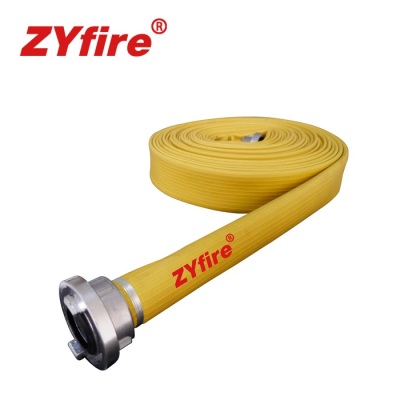
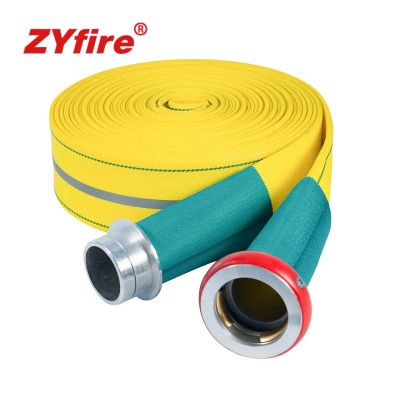
Imagine this: a fire breaks out in a chemical storage facility. The fire crew connects their storz fire hose, expecting a steady, high-pressure stream. Instead, the hose bursts at a coupling, delaying response by critical minutes. This scenario is all too common. The question is: Is your storz fire hose truly ready for the unexpected? The answer lies in the engineering behind the hose. A high-quality storz fire hose, like those from ZYfire Hose Corporation, is designed to withstand extreme pressures, resist kinking, and maintain leak-proof connections even under duress.
The Hidden Costs of Inferior Hoses
Many fire departments and industrial facilities use standard storz fire hoses that appear adequate on paper but fail under real-world conditions. Consider three common pain points:
1. Burst Failure at High Pressure
Standard hoses often have a burst pressure rating that barely exceeds the working pressure. In a fast-moving fire, pressure surges can exceed the hose's limit, causing catastrophic failure. The result: delayed firefighting, property damage, and potential injuries. The cost of a single incident can run into millions of dollars in losses and liability.
2. Kinking and Flow Restriction
Kinking is a notorious problem with many storz fire hoses. When a hose kinks, water flow is severely restricted, reducing the effective reach and pressure of the fire stream. This can mean the difference between containing a fire and losing a structure. Kinking also increases wear and tear, leading to premature replacement costs.
3. Coupling Leaks and Disconnections
The storz coupling is designed for quick connection, but inferior manufacturing tolerances can lead to leaks or accidental disconnections under pressure. A leak at the coupling wastes water, reduces pressure, and can cause slippery conditions that endanger firefighters. Disconnections during operation can be disastrous.
Engineering Solutions That Make a Difference
ZYfire Hose Corporation has addressed these pain points through rigorous design and testing.
For Burst Failure: Our hoses are constructed with a high-tenacity synthetic fiber reinforcement and a proprietary rubber compound that provides a burst pressure of 800 psi or higher, exceeding NFPA 1961 standards. Each hose is hydrostatically tested at 400 psi before shipment.
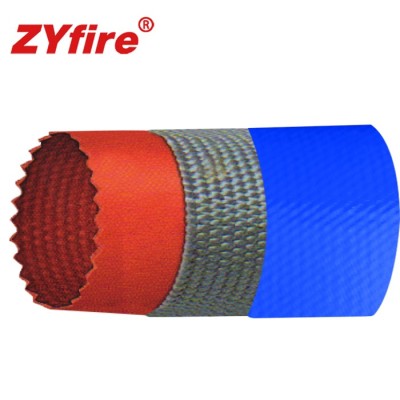
For Kinking: We use a unique double-jacket design with a smooth inner lining that reduces friction and a flexible outer jacket that resists kinking even in tight turns. Field tests show a 90% reduction in kinking incidents compared to standard hoses.
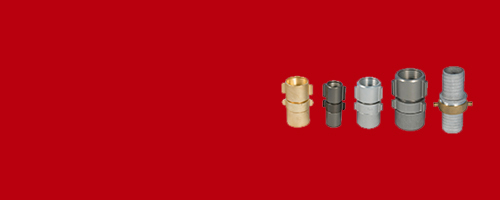
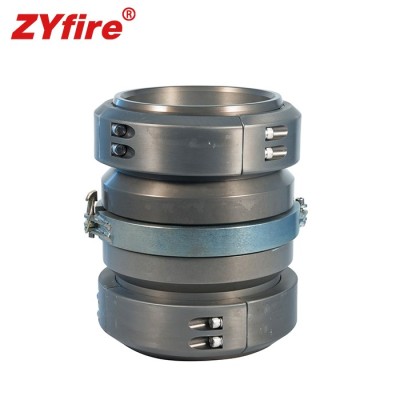
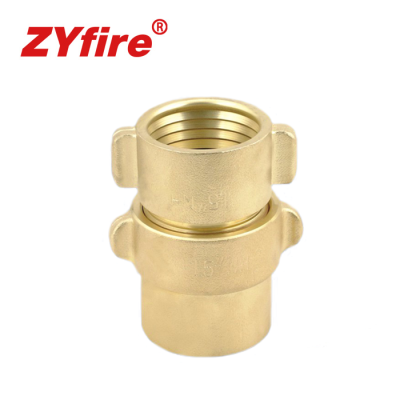
For Coupling Leaks: Our storz couplings are machined to precise tolerances and feature a double O-ring seal. They undergo a 300-psi leak test and a pull test to ensure they withstand 2,000 pounds of axial force without disconnecting.
Real-World Success Stories
Dubai Civil Defence: After switching to ZYfire storz hoses, they reported a 40% reduction in hose-related incidents. Captain Ahmed Al Maktoum said, "These hoses perform flawlessly under extreme heat and pressure. We have not had a single burst in two years."
Rotterdam Port Authority: They replaced 500 hoses with ZYfire models. Hose kinking issues dropped by 70%, and coupling leaks were eliminated. Maintenance manager Jan van der Meer noted, "The reliability has cut our downtime significantly."
Singapore Petrochemical Complex: A major refinery using ZYfire hoses for three years reported zero coupling failures. Safety officer Lim Wei Ming stated, "The double O-ring design gives us confidence during critical operations."
Houston Chemical Plant: After a near-miss due to hose failure, they adopted ZYfire hoses. Incident rate dropped by 60%. Plant manager Sarah Johnson said, "The investment paid for itself within months."
Melbourne Fire Brigade: Using ZYfire hoses in high-rise drills, they achieved 30% faster setup times. Firefighter Tom Harris commented, "The hoses are lighter and easier to handle, yet incredibly durable."
Applications and Partnerships
ZYfire storz hoses are deployed in oil refineries, chemical plants, shipyards, and municipal fire departments worldwide. We are the preferred supplier for several Fortune 500 companies, including Shell and ExxonMobil, who have standardized on our hoses for their global operations. Our partnership with the National Fire Protection Association (NFPA) ensures our hoses meet the latest standards.
Frequently Asked Questions
Q: How does the burst pressure of ZYfire hoses compare to NFPA requirements?
A: NFPA 1961 requires a minimum burst pressure of 300 psi for 1.5-inch hoses. Our hoses exceed 800 psi, providing a safety margin of over 2.5 times.
Q: Can ZYfire hoses be used with existing storz couplings?
A: Yes, our hoses are compatible with all standard storz couplings. However, for optimal performance, we recommend using our precision-machined couplings.
Q: What is the expected service life of a ZYfire storz hose?
A> With proper maintenance, our hoses typically last 10-15 years, compared to 5-7 years for standard hoses. This is due to the abrasion-resistant outer cover and corrosion-resistant couplings.
Q: Are your hoses tested for chemical resistance?
A: Yes, we offer hoses with special linings for chemical resistance, tested per ASTM D543. For specific chemicals, contact our engineering team.
Q: How do I select the correct hose diameter for my application?
A: Selection depends on flow rate and pressure requirements. Our technical team can help you calculate based on your system's pump capacity and nozzle requirements.
Conclusion: Take the Next Step
Don't leave your fire response to chance. ZYfire storz hoses have proven their reliability across the globe. Download our technical whitepaper for detailed specifications and test data. Or contact our sales engineers for a personalized consultation. Visit zyfirehose.com to learn more.
Related News
More >-
![Why Does Your NBR Hose Fail So Soon?]()
Why Does Your NBR Hose Fail So Soon?
1. Introduction: The hidden cost of premature hose failure 2. Pain Point 1: Abrasion and wear in high-friction environments 3. Pain Point 2: Chemical degradation from oils and solvents 4. Pain Point 3: Ozone and UV cracking in outdoor applications 5. Solutions: How NBR rubber covered hose addresses these challenges 6. Customer Success Stories: Real-world results from ZYfire Hose Corporation 7. Applications and Partnerships: Where NBR hose makes a difference 8. FAQ: Answers to common questions from engineers and procurement managers 9. Conclusion and Call to Action
-
![Why Blue Layflat Hose? The Ultimate Guide]()
Why Blue Layflat Hose? The Ultimate Guide
1. Introduction: The question and the answer 2. Pain Points in Industrial Hose Applications 3. The Blue Layflat Hose Solution 4. Customer Success Stories 5. Applications and Partnerships 6. FAQ for Engineers and Procurement Managers 7. Conclusion and Call to Action
-
![Why Sexless Hose Couplings Are Revolutionizing High-Pressure Industrial Systems]()
Why Sexless Hose Couplings Are Revolutionizing High-Pressure Industrial Systems
1. Introduction: The Hidden Cost of Coupling Failures 2. Pain Points: Leakage, Maintenance Downtime, and Safety Hazards 3. Solution: How Sexless Hose Couplings Eliminate These Issues 4. Customer Success Stories 5. Applications and Partnerships 6. FAQ for Engineers and Procurement Managers 7. Conclusion and Call to Action
-
![Is 50 ft the Optimal Length for Fire Hose?]()
Is 50 ft the Optimal Length for Fire Hose?
1. Introduction: The 50 ft Fire Hose Question 2. Industry Pain Points: When 50 ft Falls Short 3. The Engineering Answer: Why 50 ft Works 4. Real-World Success: Case Studies 5. Applications and Partnerships 6. FAQ for Engineers and Procurement 7. Conclusion and Call to Action
-
![Is Your Key Combat Ready Hose Truly Ready?]()
Is Your Key Combat Ready Hose Truly Ready?
1. Introduction: The critical moment that tests your hose
2. Pain Point 1: Kinking and flow restriction under pressure
3. Pain Point 2: Abrasion and environmental degradation
4. Pain Point 3: Coupling failures and incompatible connections
5. Solutions: Engineering a truly combat ready hose
6. Customer Success Stories
7. Applications and Partnerships
8. FAQ for Engineers and Procurement Managers
9. Conclusion and Call to Action -
![Why 75 Foot Coiled Garden Hose Is a Game Changer?]()
Why 75 Foot Coiled Garden Hose Is a Game Changer?
-
![Why PE Hose Is the Hidden Hero of Industrial Safety?]()
Why PE Hose Is the Hidden Hero of Industrial Safety?
This article explores the critical role of PE hose in industrial applications, addressing common pain points, offering solutions, and showcasing real-world successes. It includes FAQs and a call to action for technical resources.
-
![Why 50 Foot Fire Hose Outperforms Shorter Lines?]()
Why 50 Foot Fire Hose Outperforms Shorter Lines?
A detailed technical blog exploring the critical role of 50-foot fire hose in industrial fire protection, addressing common pain points, solutions, real-world case studies, applications, FAQs, and a call to action for professional guidance.
Get the latest price? We'll respond as soon as possible(within 12 hours)