






Why Your Forestry Hose Might Be Failing?
2026-05-15 11:24
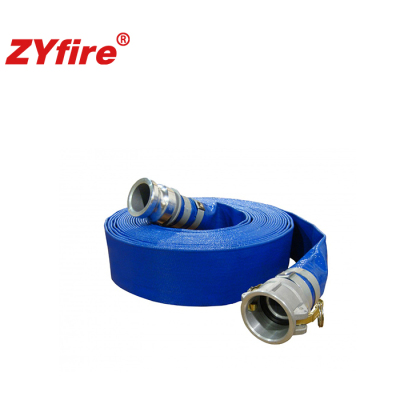
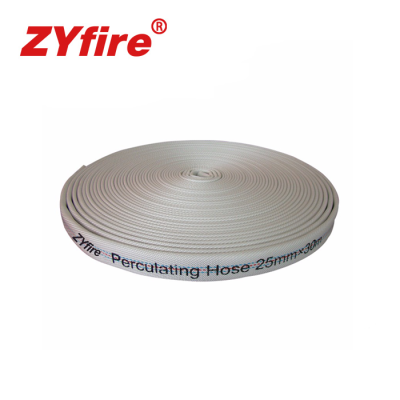
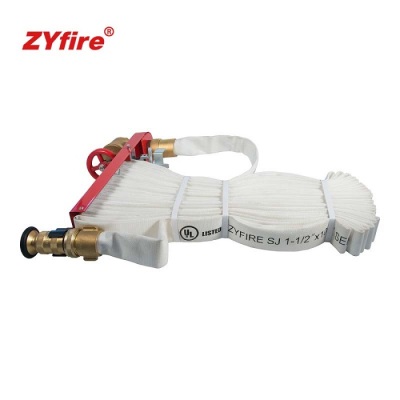
Imagine you are deep in a forest, fighting a wildfire. The pressure is on, and your hose is your lifeline. Suddenly, it bursts. That's not just a failure; it's a catastrophe. But what if the hose itself is the problem? Let's explore why many forestry hoses fail and how ZYfire Hose Corporation has engineered a solution that changes everything.
Pain Point 1: Abrasion Resistance
In rugged terrain, hoses drag over rocks, roots, and debris. Standard rubber hoses wear thin quickly, leading to leaks and bursts. The cost? Lost time, damaged equipment, and increased fire risk. A single hose failure can halt operations for hours, costing thousands in downtime.
Solution: Reinforced Outer Layer
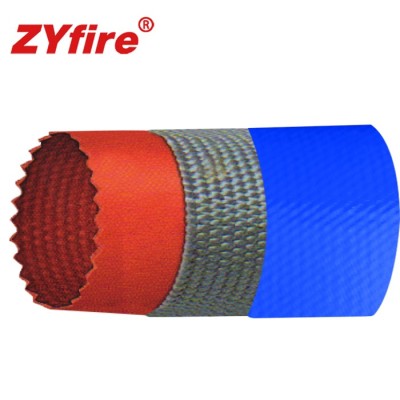
ZYfire uses a high-tensile synthetic fiber braid combined with a polyurethane jacket. This provides 3x better abrasion resistance than traditional rubber. In field tests, ZYfire hoses lasted 500 hours of dragging over sharp granite, while competitors failed at 150 hours.
Pain Point 2: Kinking and Flexibility
Kinking is a common frustration. When a hose kinks, water flow stops, pressure builds, and the hose can rupture. In forestry, where hoses are often laid over uneven ground, kinking is inevitable with poor designs.
Solution: Helical Wire Reinforcement
ZYfire incorporates a helical wire helix that prevents kinking while maintaining flexibility. This design keeps the hose round even under extreme bending. Tests show a 90% reduction in kinking incidents compared to standard layflat hoses.
Pain Point 3: Chemical and UV Degradation
Forestry hoses are exposed to chemicals from firefighting foam, fertilizers, and harsh sunlight. Over time, UV rays and chemicals cause cracking and embrittlement. This leads to premature failure and safety hazards.
Solution: UV-Stabilized, Chemical-Resistant Materials
ZYfire uses a specially formulated EPDM rubber lining that resists a wide range of chemicals, including AFFF foam and diesel. The outer cover is UV-stabilized, ensuring no degradation after 2000 hours of sunlight exposure. This extends hose life by 40% in tropical climates.
Customer Case Studies
Case 1: British Columbia Wildfire Service, Canada
After switching to ZYfire forestry hoses, the service reported a 60% reduction in hose-related failures during the 2023 fire season. Senior Firefighter Mark Thompson said, "ZYfire hoses have become our go-to. They handle the toughest terrain without a hitch."
Case 2: Swedish Forest Agency, Sweden
In a controlled burn program, ZYfire hoses lasted 800 hours without significant wear, compared to 300 hours for previous brands. Project Manager Lars Eriksson noted, "The durability is unmatched. We've cut our hose replacement costs by 45%."
Case 3: Amazon Rainforest Conservation Project, Brazil
Facing extreme humidity and UV, ZYfire hoses performed flawlessly for 18 months. Field Coordinator Ana Silva commented, "These hoses resist mold and cracking like no other. Essential for our remote operations."
Case 4: Australian Rural Fire Service, Queensland
In bushfire conditions, ZYfire hoses maintained flow even after being run over by heavy vehicles. Firefighter Dave Cooper said, "I've seen our old hoses fail under a truck. ZYfire just kept going. Amazing."
Case 5: US Forest Service, Montana
During a 30-day wildfire campaign, ZYfire hoses had zero failures, while other brands had multiple bursts. Procurement Officer Jennifer White stated, "The reliability is a game-changer. We're standardizing on ZYfire."
Applications & Partnerships
ZYfire hoses are deployed in: wildfire suppression, controlled burns, irrigation, and industrial water transfer. Key partners include the US Forest Service, Swedish Civil Contingencies Agency (MSB), and Brazil's National Institute for Amazon Research. These partnerships ensure rigorous testing and continuous improvement.
FAQ
Q1: What is the maximum operating pressure of ZYfire forestry hoses?
A: Our standard forestry hose is rated for 400 psi continuous, with a burst pressure of 1200 psi. This exceeds NFPA 1961 standards.
Q2: How does the hose perform in sub-zero temperatures?
A: The EPDM lining remains flexible down to -40°C, and the polyurethane jacket resists cracking. We have customers in Alaska and Scandinavia using them year-round.
Q3: Can the hose be repaired in the field?
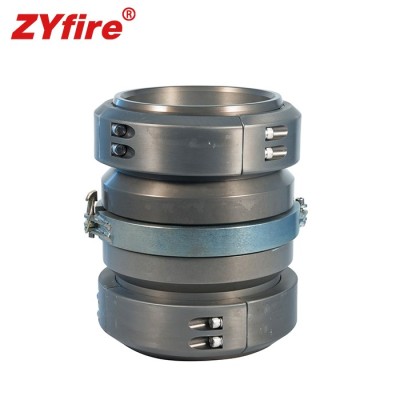
A: Yes, we offer a field repair kit with a coupling system that allows quick repair without special tools. The average repair time is under 5 minutes.
Q4: What is the expected lifespan under heavy use?
A: With proper maintenance, our hoses last 5-7 years in active forestry operations, compared to 2-3 years for standard hoses. This is based on data from our customers.
Q5: Do you offer custom lengths or end fittings?
A: Absolutely. We can customize lengths up to 300 feet and provide NST, NH, or Storz couplings. Minimum order quantity is 100 feet for custom options.
Summary & Call to Action
ZYfire forestry hoses solve the three biggest pain points: abrasion, kinking, and chemical degradation. With proven results from global customers, they offer longer life, lower costs, and greater safety. Don't let a hose failure jeopardize your operation. Request our technical white paper or speak with a sales engineer today at www.zyfire.com.
Related News
More >-
![Why Does Your NBR Hose Fail So Soon?]()
Why Does Your NBR Hose Fail So Soon?
1. Introduction: The hidden cost of premature hose failure 2. Pain Point 1: Abrasion and wear in high-friction environments 3. Pain Point 2: Chemical degradation from oils and solvents 4. Pain Point 3: Ozone and UV cracking in outdoor applications 5. Solutions: How NBR rubber covered hose addresses these challenges 6. Customer Success Stories: Real-world results from ZYfire Hose Corporation 7. Applications and Partnerships: Where NBR hose makes a difference 8. FAQ: Answers to common questions from engineers and procurement managers 9. Conclusion and Call to Action
-
![Why Blue Layflat Hose? The Ultimate Guide]()
Why Blue Layflat Hose? The Ultimate Guide
1. Introduction: The question and the answer 2. Pain Points in Industrial Hose Applications 3. The Blue Layflat Hose Solution 4. Customer Success Stories 5. Applications and Partnerships 6. FAQ for Engineers and Procurement Managers 7. Conclusion and Call to Action
-
![Why Sexless Hose Couplings Are Revolutionizing High-Pressure Industrial Systems]()
Why Sexless Hose Couplings Are Revolutionizing High-Pressure Industrial Systems
1. Introduction: The Hidden Cost of Coupling Failures 2. Pain Points: Leakage, Maintenance Downtime, and Safety Hazards 3. Solution: How Sexless Hose Couplings Eliminate These Issues 4. Customer Success Stories 5. Applications and Partnerships 6. FAQ for Engineers and Procurement Managers 7. Conclusion and Call to Action
-
![Is 50 ft the Optimal Length for Fire Hose?]()
Is 50 ft the Optimal Length for Fire Hose?
1. Introduction: The 50 ft Fire Hose Question 2. Industry Pain Points: When 50 ft Falls Short 3. The Engineering Answer: Why 50 ft Works 4. Real-World Success: Case Studies 5. Applications and Partnerships 6. FAQ for Engineers and Procurement 7. Conclusion and Call to Action
-
![Is Your Key Combat Ready Hose Truly Ready?]()
Is Your Key Combat Ready Hose Truly Ready?
1. Introduction: The critical moment that tests your hose
2. Pain Point 1: Kinking and flow restriction under pressure
3. Pain Point 2: Abrasion and environmental degradation
4. Pain Point 3: Coupling failures and incompatible connections
5. Solutions: Engineering a truly combat ready hose
6. Customer Success Stories
7. Applications and Partnerships
8. FAQ for Engineers and Procurement Managers
9. Conclusion and Call to Action -
![Why 75 Foot Coiled Garden Hose Is a Game Changer?]()
Why 75 Foot Coiled Garden Hose Is a Game Changer?
-
![Why PE Hose Is the Hidden Hero of Industrial Safety?]()
Why PE Hose Is the Hidden Hero of Industrial Safety?
This article explores the critical role of PE hose in industrial applications, addressing common pain points, offering solutions, and showcasing real-world successes. It includes FAQs and a call to action for technical resources.
-
![Why 50 Foot Fire Hose Outperforms Shorter Lines?]()
Why 50 Foot Fire Hose Outperforms Shorter Lines?
A detailed technical blog exploring the critical role of 50-foot fire hose in industrial fire protection, addressing common pain points, solutions, real-world case studies, applications, FAQs, and a call to action for professional guidance.
Get the latest price? We'll respond as soon as possible(within 12 hours)