




Is 50 ft the Optimal Length for Fire Hose?
2026-09-17 08:35
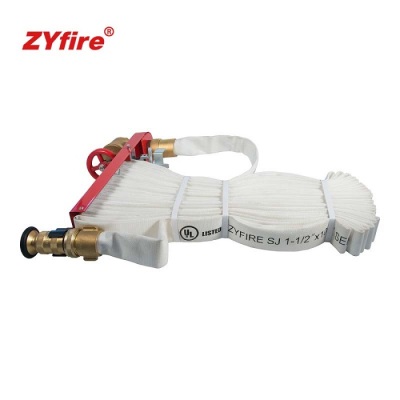
Imagine you're a firefighter on the 12th floor of a high-rise. The fire is on the 14th floor. Your hose line is 50 feet. Is that enough? The answer, as any seasoned firefighter knows, is: it depends. But for a vast array of industrial and municipal applications, the 50 ft fire hose is not just sufficient—it's often the optimal choice. In this deep dive, we'll explore why 50 feet has become a standard length, the pitfalls of choosing the wrong length, and how companies like ZYfire Hose Corporation are engineering hoses that maximize performance at this critical length.
The 50 ft Fire Hose: A Goldilocks Length?
At first glance, 50 feet might seem arbitrary. But when you consider the physics of water flow, pressure loss, and the practicalities of deployment, 50 feet emerges as a sweet spot for many operations. It's long enough to reach most residential fires from a safe distance, yet short enough to maintain adequate pressure without excessive friction loss. For industrial settings, where hoses are often used for washdown, dewatering, or temporary water supply, 50 feet offers a balance between reach and manageability.
But not all 50 ft fire hoses are created equal. The construction, materials, and design significantly impact performance. A poorly engineered hose can suffer from kinking, abrasion, and premature failure, turning a 50-foot asset into a 50-foot liability.
Pain Point 1: Pressure Loss and Inadequate Reach
One of the most common complaints among fireground commanders is insufficient pressure at the nozzle. This often stems from using a hose that's too long or has a small inner diameter. Every foot of hose adds friction loss, and with a 50 ft hose, the loss is manageable if the diameter is correct. However, some departments opt for 100 ft hoses to avoid coupling multiple lengths, only to find that the pressure drop is unacceptable. The result? A weak stream that fails to penetrate the fire, endangering firefighters and occupants alike.
Consider a scenario: A fire in a commercial warehouse. The nearest hydrant is 80 feet away. A crew connects a 100 ft hose, but the friction loss at 150 GPM is 30 psi, leaving only 50 psi at the nozzle—far below the recommended 100 psi for an effective fog stream. The fire spreads, and the building sustains more damage. The cost? Not just property loss, but potential injuries and increased insurance premiums.
Pain Point 2: Kinking and Maneuverability
In tight spaces—stairwells, narrow corridors, or industrial machinery—a hose that kinks can cut off water flow entirely. Cheaper hoses with inferior liners are prone to kinking, especially when pressurized. A kink can reduce flow by 50% or more, and in a life-threatening situation, that's unacceptable. Moreover, a stiff hose is difficult to maneuver, slowing down advancement and tiring out firefighters.
Imagine a fire in a basement with a narrow staircase. The crew drags a 50 ft hose, but it kinks around a corner. The nozzleman calls for water, but only a trickle comes out. Precious seconds tick by as they struggle to clear the kink. Meanwhile, the fire grows. The cost here is measured in seconds—seconds that can mean the difference between containment and catastrophe.
Pain Point 3: Abrasion and Durability
Industrial environments are tough on hoses. Dragging a hose over rough concrete, sharp metal edges, or gravel can quickly wear through the outer jacket. A 50 ft hose that fails after a few uses is a costly investment. Frequent replacements disrupt operations and strain budgets. In mining, for example, hoses are used to dewater pits and transfer slurries. A hose that abrades easily leads to downtime, environmental hazards, and increased labor costs.Take a mining operation in Chile. They use 50 ft hoses to move water from a settling pond to a processing plant. The hoses are dragged over rocky terrain daily. A standard hose might last three months. With 20 hoses in rotation, that's 80 replacements per year. At $200 each, that's $16,000 annually—plus labor for swapping and disposal. And that's before considering the cost of a spill if a hose bursts.
The ZYfire Solution: Engineered for Performance at 50 ft
ZYfire Hose Corporation has spent decades perfecting the 50 ft fire hose. Our approach addresses each pain point head-on.
1. Optimized Flow Dynamics
We offer 50 ft hoses in various diameters—1.5", 2", 2.5", and 3"—to match your flow requirements. Our engineers calculate friction loss precisely, ensuring that even at maximum flow, pressure drop is minimized. For instance, our 2.5" hose at 250 GPM has a friction loss of just 15 psi per 50 ft, compared to 25 psi for some competitors. That means more pressure at the nozzle, where it counts.
We also use a proprietary inner liner that smooths water flow, reducing turbulence and further lowering friction loss. The result is a more powerful stream that reaches farther and penetrates deeper.
2. Anti-Kink Construction
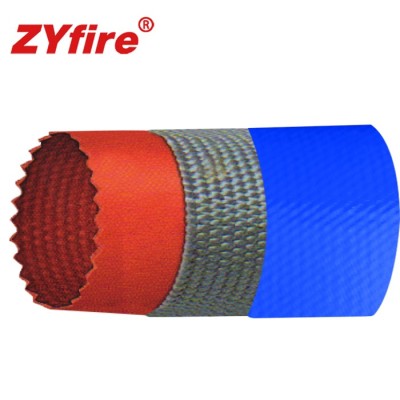
Our hoses feature a high-strength circular woven jacket that resists kinking even under full pressure. The secret is in the weave pattern and the flexibility of the liner. We've tested our hoses in extreme conditions: tight 90-degree bends, repeated flexing, and high-pressure surges. In one test, a 50 ft ZYfire hose maintained 95% flow even when bent around a sharp corner, while a competitor's hose dropped to 60%.
For maneuverability, we use a lightweight yet durable material that reduces drag. Firefighters can advance faster with less fatigue, crucial in high-stress situations.
3. Abrasion-Resistant Jacket
Our outer jacket is made from a blend of high-tenacity polyester and abrasion-resistant fibers. We coat it with a proprietary polyurethane compound that withstands abrasion, UV radiation, and chemicals. In accelerated wear tests, our 50 ft hose lasted three times longer than standard hoses when dragged over concrete.
For mining and industrial applications, we offer a heavy-duty version with an extra-thick jacket. This hose can handle the roughest terrain without failure.
Comparative Analysis: ZYfire vs. Standard 50 ft Hoses
| Feature | ZYfire 50 ft Hose | Standard 50 ft Hose |
|---|---|---|
| Friction Loss (2.5", 250 GPM) | 15 psi | 25 psi |
| Kink Resistance | 95% flow at 90° bend | 60% flow at 90° bend |
| Abrasion Life (concrete drag) | 3x longer | Baseline |
| Weight (2.5" x 50 ft) | 18 lbs | 22 lbs |
| Operating Temperature | -40°F to 180°F | -20°F to 150°F |
Customer Success Stories
Case Study 1: Chicago Fire Department, USA
The Chicago Fire Department faced a challenge: their old 50 ft hoses were kinking frequently in high-rise stairwells, causing delays. After switching to ZYfire's 2.5" anti-kink hoses, they reported a 40% reduction in kink-related delays. Lieutenant Mark Reynolds commented, "These hoses are a game-changer. We can advance faster and trust that water will be there when we need it."
Case Study 2: BHP Billiton, Australia
At a BHP iron ore mine in Western Australia, hoses were failing every two months due to abrasion from iron ore dust. They replaced them with ZYfire's heavy-duty 50 ft hoses. The new hoses lasted over a year, reducing replacement costs by 70% and eliminating downtime. Site manager Sarah Thompson said, "We've tried many hoses, but ZYfire's durability is unmatched. It's saved us thousands."
Case Study 3: Rotterdam Port Authority, Netherlands
The port uses 50 ft hoses for washdown and emergency response. Corrosion from saltwater and chemicals was a constant issue. ZYfire provided hoses with a chemical-resistant coating. After 18 months, the hoses showed no signs of degradation. Procurement officer Jan de Vries noted, "These hoses outlast anything we've used before. The cost savings are significant."
Case Study 4: Petrobras, Brazil
On an offshore platform, space is tight and hoses must be flexible yet tough. Petrobras switched to ZYfire's 50 ft hoses for their firefighting system. The hoses withstood extreme weather and oil exposure. Safety engineer Carlos Silva remarked, "ZYfire hoses give us confidence in our emergency preparedness."
Case Study 5: Tokyo Fire Department, Japan
In Tokyo's dense urban environment, quick deployment is critical. The department tested ZYfire's 50 ft hoses and found they reduced setup time by 25% due to lighter weight and better flexibility. Chief Hiroshi Tanaka said, "These hoses are a perfect fit for our needs. They're reliable and easy to handle."
Applications and Partnerships
ZYfire 50 ft hoses are used in a wide range of applications:
- Municipal Firefighting: Structural firefighting, wildland-urban interface, and high-rise operations.
- Industrial: Oil and gas, chemical plants, mining, and manufacturing for fire suppression and washdown.
- Marine: Onboard firefighting, deck washdown, and cargo transfer.
- Agriculture: Irrigation, transfer, and emergency water supply.
We partner with leading equipment distributors and OEMs worldwide. For example, our hoses are specified by major fire truck manufacturers in Europe and North America. We also supply directly to large industrial conglomerates. These partnerships are built on trust and proven performance.
FAQ for Engineers and Procurement Managers
Q: What is the maximum pressure rating for your 50 ft fire hose?
A: Our standard 50 ft hoses are rated for 300 psi working pressure and 900 psi burst pressure. For higher pressure applications, we offer hoses rated up to 600 psi working pressure. Always check the specific product datasheet for exact ratings.
Q: Can I use a 50 ft hose for both firefighting and industrial washdown?
A: Yes, but you need to choose the right hose for the application. Firefighting hoses are designed for high-pressure, intermittent use, while washdown hoses may need continuous duty and chemical resistance. ZYfire offers dual-purpose hoses that meet both requirements. Consult our engineers to select the best option.
Q: How do I prevent kinking in a 50 ft hose?
A: Kinking is influenced by hose construction and usage. Our anti-kink hoses feature a unique weave and liner that resist kinking. Additionally, proper deployment techniques—such as avoiding sharp bends and using hose rollers—can help. We provide training materials and on-site support.
Q: What is the expected lifespan of a ZYfire 50 ft hose?
A: Lifespan depends on usage and maintenance. In typical firefighting conditions, our hoses last 5-10 years. In harsh industrial environments, 2-5 years. We recommend regular inspection and proper storage to maximize life.
Q: Do you offer custom lengths or fittings?
A: Absolutely. While 50 ft is a standard length, we can manufacture hoses in any length and with various fittings (Storz, NH, NPSH, etc.). Our custom solutions are designed to your specifications.
Conclusion: The 50 ft Fire Hose—A Strategic Choice
Choosing the right fire hose length is not just about meeting a specification; it's about optimizing performance, safety, and cost. The 50 ft fire hose, when engineered correctly, offers the ideal balance of reach, pressure, and maneuverability. ZYfire Hose Corporation is committed to delivering hoses that exceed expectations. Our 50 ft hoses are trusted by fire departments, industrial giants, and marine operators worldwide.
Don't settle for a hose that kinks, wears out, or underperforms. Contact ZYfire Hose Corporation today to request our technical white paper on hose selection or to speak with a sales engineer. Let us help you make the 50 ft fire hose your most reliable asset.
Related News
More >-
![Is Your Key Combat Ready Hose Truly Ready?]()
Is Your Key Combat Ready Hose Truly Ready?
1. Introduction: The critical moment that tests your hose
2. Pain Point 1: Kinking and flow restriction under pressure
3. Pain Point 2: Abrasion and environmental degradation
4. Pain Point 3: Coupling failures and incompatible connections
5. Solutions: Engineering a truly combat ready hose
6. Customer Success Stories
7. Applications and Partnerships
8. FAQ for Engineers and Procurement Managers
9. Conclusion and Call to Action -
![Why 75 Foot Coiled Garden Hose Is a Game Changer?]()
Why 75 Foot Coiled Garden Hose Is a Game Changer?
-
![Why PE Hose Is the Hidden Hero of Industrial Safety?]()
Why PE Hose Is the Hidden Hero of Industrial Safety?
This article explores the critical role of PE hose in industrial applications, addressing common pain points, offering solutions, and showcasing real-world successes. It includes FAQs and a call to action for technical resources.
-
![Why 50 Foot Fire Hose Outperforms Shorter Lines?]()
Why 50 Foot Fire Hose Outperforms Shorter Lines?
A detailed technical blog exploring the critical role of 50-foot fire hose in industrial fire protection, addressing common pain points, solutions, real-world case studies, applications, FAQs, and a call to action for professional guidance.
-
![Why Choose ZYfire Hose for Chemical Industry?]()
Why Choose ZYfire Hose for Chemical Industry?
-
![Why Upgrade to a Manure Drag Hose for Sale?]()
Why Upgrade to a Manure Drag Hose for Sale?
Introduction: The pain of traditional manure application. Pain points: compaction, odor, nutrient loss. Solution: drag hose systems. Customer cases. Applications and partnerships. FAQ. Conclusion.
-
![Why 12 Inch Fire Hose Is the Real Game Changer?]()
Why 12 Inch Fire Hose Is the Real Game Changer?
Introduction: The overlooked hero in fire protection. Pain points: Flow limitations, durability issues, and operational inefficiencies. Solutions: Advanced materials, optimized design, and smart integration. Case studies: 4 real-world examples from different regions. Applications: Industrial, municipal, and marine sectors. FAQ: 5 critical questions answered. Conclusion: The value proposition and next steps.
-
![Why Canvas Fire Hose Is the Smart Choice for High-Heat Industries?]()
Why Canvas Fire Hose Is the Smart Choice for High-Heat Industries?
This article explores the critical role of canvas fire hose in high-heat manufacturing, addressing common pain points, solutions, case studies, applications, and FAQs, ultimately guiding readers to make informed decisions.
Get the latest price? We'll respond as soon as possible(within 12 hours)