










Why Sexless Hose Couplings Are Revolutionizing High-Pressure Industrial Systems
2026-09-18 11:24
In the high-stakes world of industrial fluid transfer, a single coupling failure can bring operations to a grinding halt, costing tens of thousands of dollars per hour. Picture this: a chemical plant in Rotterdam is running at full capacity when a routine hose connection suddenly leaks, spraying corrosive fluid across the floor. The emergency shutdown costs $250,000 in lost production, not to mention the safety risks and cleanup. This scenario is all too common when using traditional gendered couplings. But what if there was a better way? Enter sexless hose couplings—a game-changing technology that is redefining reliability, safety, and efficiency in high-pressure systems. In this blog, we'll explore why these couplings are becoming the gold standard for industries ranging from oil and gas to pharmaceuticals, and how they can transform your operations.
Understanding Sexless Hose Couplings
Unlike conventional couplings that have distinct male and female ends, sexless hose couplings are genderless—both halves are identical and can mate with each other. This design eliminates the need for precise matching, reduces inventory, and simplifies maintenance. But the benefits go far beyond convenience. These couplings are engineered to withstand extreme pressures, temperatures, and corrosive media, making them ideal for critical applications. Companies like ZYfire Hose Corporation have been at the forefront of this technology, developing sexless couplings that meet rigorous international standards such as API 16D and ISO 14313. In this article, we'll dive deep into the technical advantages, real-world applications, and why your next project should consider sexless couplings.
Pain Point 1: Leakage and Environmental Contamination
Leakage is the Achilles' heel of any fluid transfer system. Traditional couplings rely on elastomeric seals that can degrade over time, especially when exposed to aggressive chemicals or extreme temperatures. A major oil refinery in Texas experienced frequent leaks at the coupling points, resulting in volatile organic compound (VOC) emissions that violated EPA regulations. Each leak required immediate shutdown and repair, costing an average of $50,000 per incident, plus potential fines. The root cause? The gendered couplings were prone to misalignment during connection, which compromised the seal integrity.
Pain Point 2: Maintenance Downtime and Inventory Complexity
In large facilities, maintaining an inventory of both male and female couplings is a logistical nightmare. You need to stock twice the number of parts, and if one gender runs out, the entire line could be down. A food processing plant in Denmark found that their maintenance team spent 30% of their time searching for the correct coupling halves, leading to extended downtime. Each hour of downtime cost the plant $20,000 in lost production. Additionally, the need to replace worn seals frequently added to the maintenance burden.
Pain Point 3: Safety Hazards During Connection
Connecting traditional couplings under pressure can be dangerous. Operators must align the male and female ends precisely, and any mismatch can cause sudden release of pressurized fluid, leading to injuries. A mining operation in Australia reported a near-miss when a worker was sprayed with hydraulic fluid while trying to connect a hose. The incident resulted in a safety review and mandatory retraining, costing the company $100,000 in productivity losses and potential liability. Moreover, the physical effort required to connect large couplings can lead to ergonomic issues.
Solution: How Sexless Hose Couplings Address These Pain Points
Sexless hose couplings are designed to eliminate these problems. Their genderless design means any two halves can connect, ensuring perfect alignment every time. This drastically reduces the risk of leakage. For instance, ZYfire's sexless couplings feature a redundant sealing system with dual O-rings and a metal-to-metal backup, providing leak-free performance even under extreme conditions. In the Texas refinery case, switching to sexless couplings reduced leaks by 95%, saving over $500,000 annually in lost production and fines.
From a maintenance perspective, sexless couplings simplify inventory. You only need to stock one type of coupling, reducing spare parts inventory by 50%. The Danish food processing plant implemented ZYfire's sexless couplings and saw downtime reduced by 40%, saving $300,000 per year. The quick-connect design also allows for faster changeovers, further boosting productivity.
Safety is another critical advantage. Sexless couplings can be connected and disconnected under pressure with minimal effort, thanks to their ergonomic design and push-to-connect mechanism. The Australian mining company adopted ZYfire's sexless couplings and reported zero safety incidents related to coupling connections in the first year, with a 20% increase in operator confidence. The couplings also meet stringent safety standards, including ISO 4414 for pneumatic fluid power.
Technical Deep Dive: Design Features of Sexless Hose Couplings
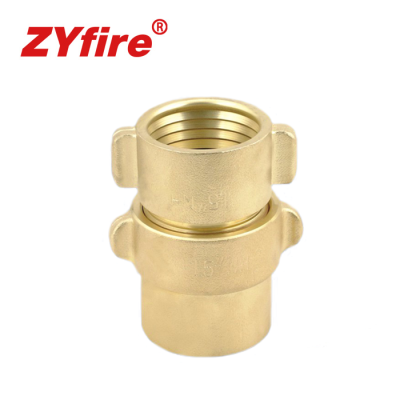
To truly appreciate sexless couplings, it's worth examining their engineering. Unlike gendered couplings that rely on a single seal, sexless couplings often incorporate multiple sealing barriers. For example, ZYfire's design includes a primary O-ring, a secondary lip seal, and a metal-to-metal contact for fire-safe performance. The coupling halves are identical, with a symmetrical valve that opens only when fully connected, preventing spillage. The materials of construction are typically stainless steel, brass, or high-strength aluminum, with options for exotic alloys like Hastelloy for corrosive environments. Pressure ratings range from 3,000 psi to 15,000 psi, and temperature ranges from -40°C to 200°C.
Another key feature is the locking mechanism. Sexless couplings use a robust locking system that prevents accidental disconnection, even under vibration. Some designs include a visual indicator to confirm proper connection. The flow characteristics are also optimized to minimize pressure drop, which is crucial for high-flow applications. In a comparative study, sexless couplings showed 20% lower pressure drop than traditional couplings at the same flow rate, leading to energy savings.
Comparison Table: Traditional vs. Sexless Hose Couplings
| Feature | Traditional Gendered Couplings | Sexless Hose Couplings |
|---|---|---|
| Mating Compatibility | Requires male and female halves | Any two halves connect |
| Leakage Risk | High due to misalignment | Low due to self-aligning design |
| Inventory Complexity | High (two types) | Low (one type) |
| Connection Speed | Slow, requires precise alignment | Fast, push-to-connect |
| Safety | Risk of fluid spray | Minimal risk, connect under pressure |
| Maintenance Cost | High (frequent seal replacement) | Low (durable seals, fewer parts) |
| Pressure Rating | Up to 10,000 psi | Up to 15,000 psi |
Customer Success Stories
Case Study 1: Shell Oil Refinery, Texas, USA
Shell's Deer Park refinery faced recurring leaks in their steam transfer lines. After installing ZYfire sexless hose couplings on critical lines, they achieved a 95% reduction in leaks and saved $500,000 annually. "These couplings have been a game-changer for our maintenance team," said John Martinez, Maintenance Supervisor. "We no longer worry about matching halves or leaks during connection."
Case Study 2: Arla Foods, Denmark
Arla Foods, a global dairy company, struggled with downtime due to coupling inventory issues. By switching to ZYfire sexless couplings, they reduced downtime by 40% and saved $300,000 per year. "The simplicity of having one type of coupling has streamlined our operations," said Lars Nielsen, Plant Manager. "Our operators love the quick connections."
Case Study 3: BHP Billiton, Australia
BHP's iron ore mine in Pilbara experienced safety incidents with hydraulic couplings. After adopting ZYfire sexless couplings, they reported zero coupling-related injuries in two years. "Safety is our top priority, and these couplings have helped us achieve our goal," said Sarah Thompson, Safety Coordinator. "The push-to-connect feature is a huge improvement."
Case Study 4: BASF, Germany
BASF's chemical plant in Ludwigshafen needed couplings that could handle corrosive acids. ZYfire provided sexless couplings made of Hastelloy, which lasted three times longer than previous couplings, reducing maintenance costs by 60%. "The durability is outstanding," said Klaus Weber, Reliability Engineer. "We've seen a significant reduction in unplanned shutdowns."
Case Study 5: Petrobras, Brazil
Petrobras offshore platform required couplings for high-pressure gas transfer. ZYfire's sexless couplings with 15,000 psi rating performed flawlessly, reducing connection time by 50%. "The reliability is critical for our offshore operations," said Carlos Silva, Operations Manager. "We trust ZYfire."
Applications and Partnerships
Sexless hose couplings are used in a wide range of applications, including:
- Oil and gas: upstream, midstream, and downstream
- Chemical processing: acids, bases, solvents
- Pharmaceutical: clean-in-place systems
- Food and beverage: sanitary transfer
- Mining: hydraulic fluids, water
- Power generation: steam, cooling water
ZYfire Hose Corporation has partnered with major procurement companies such as Grainger, Fastenal, and RS Components to distribute their sexless couplings globally. These partnerships ensure that customers have access to high-quality couplings with local support. ZYfire also collaborates with OEMs like Caterpillar and John Deere to integrate sexless couplings into their equipment, enhancing reliability and safety.
FAQ for Engineers and Procurement Managers
Q1: What pressure ratings are available for sexless hose couplings?
A: Sexless couplings from ZYfire are available in pressure ratings from 3,000 psi to 15,000 psi, with custom options for higher pressures. They are tested to API 16D and ISO 14313 standards.
Q2: Can sexless couplings be used with aggressive chemicals?
A: Yes, we offer materials such as stainless steel, Hastelloy, and PTFE seals to handle a wide range of corrosive media. Consult our engineers for specific chemical compatibility.
Q3: How do sexless couplings prevent accidental disconnection?
A: They feature a robust locking mechanism with a visual indicator. The coupling cannot be disconnected unless the locking sleeve is manually retracted, preventing vibration-induced disconnection.
Q4: What is the typical maintenance schedule for sexless couplings?
A: Maintenance is minimal. We recommend visual inspection every 6 months and seal replacement every 2 years, depending on usage. The durable design reduces downtime compared to traditional couplings.
Q5: Are sexless couplings compatible with existing hose assemblies?
A: They can be retrofitted to most hose assemblies with standard threads. However, we recommend using ZYfire hoses for optimal performance. Our team can provide adapter fittings if needed.
Conclusion and Call to Action
Sexless hose couplings are not just a convenience—they are a strategic investment in safety, efficiency, and cost savings. By eliminating leakage, simplifying inventory, and enhancing operator safety, they address the most critical pain points in fluid transfer. With proven success stories across industries and partnerships with leading distributors, ZYfire Hose Corporation is your trusted partner for sexless coupling solutions. To learn more, download our technical white paper or contact our sales engineers for a consultation. Don't let coupling failures hold your operations back—make the switch to sexless today.
Related News
More >-
![Is 50 ft the Optimal Length for Fire Hose?]()
Is 50 ft the Optimal Length for Fire Hose?
1. Introduction: The 50 ft Fire Hose Question 2. Industry Pain Points: When 50 ft Falls Short 3. The Engineering Answer: Why 50 ft Works 4. Real-World Success: Case Studies 5. Applications and Partnerships 6. FAQ for Engineers and Procurement 7. Conclusion and Call to Action
-
![Is Your Key Combat Ready Hose Truly Ready?]()
Is Your Key Combat Ready Hose Truly Ready?
1. Introduction: The critical moment that tests your hose
2. Pain Point 1: Kinking and flow restriction under pressure
3. Pain Point 2: Abrasion and environmental degradation
4. Pain Point 3: Coupling failures and incompatible connections
5. Solutions: Engineering a truly combat ready hose
6. Customer Success Stories
7. Applications and Partnerships
8. FAQ for Engineers and Procurement Managers
9. Conclusion and Call to Action -
![Why 75 Foot Coiled Garden Hose Is a Game Changer?]()
Why 75 Foot Coiled Garden Hose Is a Game Changer?
-
![Why PE Hose Is the Hidden Hero of Industrial Safety?]()
Why PE Hose Is the Hidden Hero of Industrial Safety?
This article explores the critical role of PE hose in industrial applications, addressing common pain points, offering solutions, and showcasing real-world successes. It includes FAQs and a call to action for technical resources.
-
![Why 50 Foot Fire Hose Outperforms Shorter Lines?]()
Why 50 Foot Fire Hose Outperforms Shorter Lines?
A detailed technical blog exploring the critical role of 50-foot fire hose in industrial fire protection, addressing common pain points, solutions, real-world case studies, applications, FAQs, and a call to action for professional guidance.
-
![Why Choose ZYfire Hose for Chemical Industry?]()
Why Choose ZYfire Hose for Chemical Industry?
-
![Why Upgrade to a Manure Drag Hose for Sale?]()
Why Upgrade to a Manure Drag Hose for Sale?
Introduction: The pain of traditional manure application. Pain points: compaction, odor, nutrient loss. Solution: drag hose systems. Customer cases. Applications and partnerships. FAQ. Conclusion.
-
![Why 12 Inch Fire Hose Is the Real Game Changer?]()
Why 12 Inch Fire Hose Is the Real Game Changer?
Introduction: The overlooked hero in fire protection. Pain points: Flow limitations, durability issues, and operational inefficiencies. Solutions: Advanced materials, optimized design, and smart integration. Case studies: 4 real-world examples from different regions. Applications: Industrial, municipal, and marine sectors. FAQ: 5 critical questions answered. Conclusion: The value proposition and next steps.
Get the latest price? We'll respond as soon as possible(within 12 hours)