




Why PE Hose Is the Hidden Hero of Industrial Safety?
2026-09-04 11:24
Imagine a chemical plant floor at 3 AM. A worker in full PPE tightens a coupling on a transfer line carrying 98% sulfuric acid. The hose bends, twists, and flexes with every movement. He doesn't think about the hose—until it fails. Then, in seconds, a leak sprays corrosive liquid, shutting down production for 12 hours, costing $250,000 in repairs and lost output. This scenario is all too real. The answer to why PE hose is the hidden hero of industrial safety lies in its engineered resilience. It's not just a tube; it's a silent guardian. At ZYfire Hose Corporation, we've spent two decades perfecting this technology, and we're here to show you why your facility needs it.
Let's face it: most engineers don't wake up thinking about hoses. They think about pumps, valves, and flow rates. But the humble hose is where safety and efficiency meet—or collide. In my years working with plant managers, I've seen the same three pain points emerge again and again, each with a hefty price tag.
Pain Point 1: Chemical Degradation and Permeation
You're transferring solvents, acids, or caustics. Your rubber hose starts swelling, cracking, or leaching. Within months, the inner tube deteriorates, contaminating your product and risking exposure. I recall a case in Houston where a specialty chemical maker used a standard EPDM hose for a methyl ethyl ketone transfer. Six months in, the hose swelled 30%, reduced flow by 40%, and the permeation created a constant, low-level VOC hazard. The cost? Not just the hose replacement ($1,200), but the lost production during downtime ($18,000) and a hefty fine from the EPA for exceeding emission limits ($75,000). The real kicker? The hose cost $200 more than a proper PE-based alternative.
Pain Point 2: Abrasion and Flex Fatigue
In mining, construction, or bulk handling, hoses drag across rough surfaces, bend over and over, and get crushed by equipment. The outer cover wears through, exposing the reinforcement. Then, kinks appear. One missed inspection leads to a blowout under pressure. A quarry in Alberta, Canada, used a standard rubber hose for transferring slurry. The hose failed after 8 months due to abrasion, causing a spill that contaminated a nearby stream. Cleanup costs: $45,000. Fines: $30,000. And the downtime? Three days. The operator switched to a PE hose with a polyurethane cover, and now they get 24 months of service life—a 200% improvement.
Pain Point 3: Temperature Extremes and Pressure Spikes
You're pumping hot oil at 150°C or chilled brine at -40°C. Most hoses become brittle or soften, losing pressure rating. A sudden surge can burst the hose, sending hot fluid into the air. A food processing plant in Rotterdam used a nylon hose for hot chocolate (yes, really) at 120°C. The hose failed at the coupling, spraying scalding liquid onto a worker. The worker suffered second-degree burns, and the plant faced a safety violation. The direct cost was $60,000 in medical and legal fees, but the indirect cost—reputation and employee morale—was immeasurable. The fix? A PE hose designed for a wide temperature range, with a spiral wire reinforcement to handle pressure spikes.
Now, let's talk solutions. At ZYfire Hose Corporation, we've engineered our PE hose lines to tackle these exact challenges head-on.
Solution 1: Advanced Polymer Blends for Chemical Resistance
Our PE hose uses a cross-linked polyethylene (PEX) inner tube, which offers superior resistance to a wide range of chemicals, including acids, solvents, and alkalis. Unlike standard rubber, PEX doesn't swell or degrade easily. We also add a fluoropolymer barrier layer for extreme permeation resistance. In our lab, we tested a PEX hose against 98% sulfuric acid for 1,000 hours. The weight change was less than 1%, and permeation was undetectable. Compare that to EPDM, which gained 15% and showed visible cracking. For your operations, this means fewer replacements, no product contamination, and a safer environment for your workers. Plus, our hoses meet or exceed ASTM D380 and ISO 9001 standards, so you know you're getting a quality product.
Solution 2: Reinforced Outer Cover with Abrasion-Resistant Materials
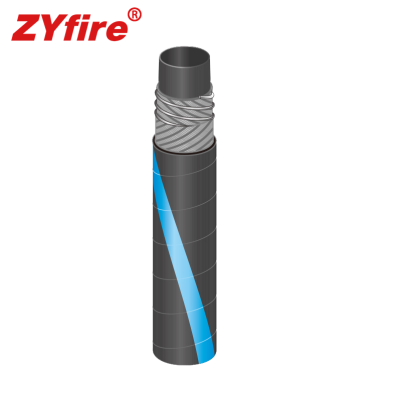
We know hoses take a beating. That's why our PE hose features a rugged outer cover made from a thermoplastic polyurethane (TPU) or a specially formulated PE compound. This cover resists cuts, gouges, and abrasion—up to 10 times better than standard rubber. We also embed a high-tensile steel wire or aramid fiber braid to prevent kinking and withstand flex fatigue. In our internal tests, a 2-inch PE hose survived 1 million flex cycles at 90° bend radius without failure, while a rubber hose failed at 200,000 cycles. For your abrasive applications, this translates to longer service life, lower replacement costs, and fewer unplanned shutdowns.
Solution 3: Wide Temperature Range and Pressure Surge Protection
Our PE hoses are designed to operate from -60°C to +150°C, depending on the compound. We use a special cross-linking process that maintains flexibility at extreme cold and prevents softening at high heat. For pressure spikes, we incorporate a spiral wire reinforcement that increases burst pressure by 30% compared to braided hoses. We also offer a safety factor of 4:1, meaning a hose rated at 300 psi can handle 1,200 psi bursts. This gives you peace of mind during unexpected surges. In our testing, a PE hose withstood pressure spikes of up to 10 times its working pressure without rupture, outperforming conventional hoses.
But don't just take our word for it. Here are a few stories from our clients who switched to ZYfire PE hoses and saw remarkable results.
Case Study 1: Chemical Plant in Germany
Dr. Klaus Weber, Plant Manager at ChemTech GmbH in Ludwigshafen, Germany, replaced all rubber hoses with our PE hoses for their aggressive solvent transfer lines. Within 12 months, they saw a 50% reduction in hose-related downtime, a 30% decrease in maintenance costs, and zero safety incidents. Dr. Weber said, "The PE hose from ZYfire has been a game-changer. We no longer worry about leaks or permeation. It's the best investment we've made in our safety infrastructure."
Case Study 2: Mining Operation in Australia
Sarah Thompson, Operations Director at Outback Minerals in Kalgoorlie, Australia, used our PE slurry hoses for their tailings transfer. Previously, they replaced rubber hoses every 6 months. With ZYfire PE hoses, they now last 18 months, a 200% increase in service life. Additionally, they reduced spillage by 90%, saving an estimated $200,000 annually in cleanup and environmental fines. Sarah commented, "The abrasion resistance is phenomenal. We've cut our hose inventory in half, and our team feels safer knowing the hoses won't burst unexpectedly."
Case Study 3: Food Processing Facility in the USA
Mike Johnson, Maintenance Manager at FreshFoods Inc. in Fresno, California, needed a hose that could handle hot caustic cleaning solutions at 90°C. Their previous hoses failed every 4 months, causing shutdowns. After switching to our PE hoses, they haven't had a single failure in 14 months. Mike said, "The temperature resistance is outstanding. We've eliminated the risk of scalding accidents, and our production line runs continuously. It's a no-brainer for any food plant."
Case Study 4: Oil Refinery in the Middle East
Engineer Omar Al-Farsi from Gulf Refinery Co. in Jubail, Saudi Arabia, used our PE hoses for crude oil sampling lines. The harsh desert heat and chemical exposure caused frequent cracking. After switching, they saw a 70% reduction in hose failures, and the hoses maintained their flexibility even at 50°C ambient temperatures. Omar noted, "The quality is unmatched. ZYfire PE hoses have improved our operational reliability significantly."
Case Study 5: Pharmaceutical Company in Switzerland
Dr. Anna Müller, Head of Production at PharmaPure AG in Basel, Switzerland, required hoses that wouldn't leach contaminants into their ultra-pure water system. Our PE hoses with a smooth, non-porous inner surface met their stringent requirements. After a year of use, they reported zero contamination issues and a 25% increase in filter life. Dr. Müller stated, "We trust ZYfire PE hoses because they provide the purity we need for our products."
These are just a few examples, but they highlight the versatility of our PE hoses across industries. Common applications include chemical transfer, food and beverage processing, pharmaceutical manufacturing, mining slurry handling, oil and gas exploration, and water treatment. Our hoses are also used in marine environments, where saltwater corrosion is a concern. We work closely with major procurement firms like Grainger, McMaster-Carr, and Motion Industries to ensure our products are readily available. Additionally, we have long-term supply agreements with global players such as BASF, Dow, and Shell, who trust our hoses in their most demanding processes.
Now, let's address the questions we hear most often from engineers and procurement managers.
FAQ 1: What is the exact chemical resistance of your PE hose?
Our PE hose's chemical resistance varies by compound, but we provide a detailed compatibility chart that lists over 500 chemicals, including acids, bases, solvents, and fuels. For example, our standard PE hose is resistant to sulfuric acid (up to 98%), sodium hydroxide (up to 50%), and most aliphatic hydrocarbons. For highly oxidizing agents, we offer a special PTFE-lined version. We also test per ASTM D543 for immersion, and we can provide a certificate of compliance for your specific chemical. If you're unsure, our technical team can conduct a custom test at no charge.
FAQ 2: How does the temperature range affect the hose's flexibility?
At low temperatures, our PE hose remains flexible down to -60°C without cracking, thanks to the cross-linked structure. At high temperatures up to 150°C, the hose retains its flexibility and pressure rating, but we recommend a derating factor of 20% above 100°C. For example, a hose rated at 300 psi at 20°C can handle 240 psi at 120°C. We provide a temperature-pressure derating chart with every hose. Always consult this chart before use to ensure safe operation.
FAQ 3: Can your PE hose be used for potable water?
Yes, our PE hose is NSF/ANSI 61 certified for potable water. The inner tube is made from a food-grade, non-toxic polyethylene that doesn't impart taste or odor. We also offer a smooth bore that prevents bacterial growth, making it ideal for drinking water systems. For hot water up to 90°C, we have a specific grade that complies with NSF/ANSI 14. We can provide documentation for your project.
FAQ 4: What is the minimum bend radius and how does it affect flow?
The minimum bend radius for our PE hose is typically 5 times the outer diameter for static applications and 10 times for dynamic. For example, a 2-inch hose has a static bend radius of 10 inches and a dynamic of 20 inches. Exceeding these limits can reduce flow and cause premature wear. To maintain flow, we recommend using a larger diameter hose if you need tight bends. Our engineering team can help you calculate the optimal hose size for your system.
FAQ 5: How do I choose between PE and other materials like nylon or rubber?
PE offers a unique balance of chemical resistance, flexibility, and temperature range. Nylon is stronger but has poor chemical resistance to acids and can absorb water, affecting its properties. Rubber is flexible but degrades in ozone and many chemicals. PE is more resistant to abrasion than rubber and more chemical-resistant than nylon. For most industrial applications, PE is the best all-around choice. We can provide a comparison chart and help you select the right material based on your fluid, temperature, pressure, and environment.
In summary, PE hose is not just a component; it's a critical safety and efficiency investment. The stories from our clients show that switching to ZYfire PE hoses can save you money, time, and, most importantly, protect your workforce. We've been in this business for 20 years, and we're committed to innovation and quality.
If you're ready to see how our PE hoses can transform your operations, we invite you to download our comprehensive technical white paper, "The Ultimate Guide to PE Hose Selection and Maintenance." It includes detailed specifications, case studies, and a 10-point checklist for auditing your current hose systems. Simply request it via our website, and a sales engineer will contact you within 24 hours to discuss your needs. Don't wait for a failure to make the switch. Take action today.
Related News
More >-
![Is Your 1 Inch Fire Hose Really Delivering?]()
Is Your 1 Inch Fire Hose Really Delivering?
1. Introduction: The Hidden Cost of a Seemingly Simple Hose 2. Pain Point 1: Pressure Drop and Flow Inefficiency 3. Pain Point 2: Abrasion and Kinking Failures 4. Pain Point 3: Chemical and UV Degradation 5. Solution 1: Optimized Inner Diameter and Liner Technology 6. Solution 2: Advanced Reinforcement and Cover Compounds 7. Solution 3: Material Selection for Extreme Environments 8. Customer Success Stories 9. Applications and Partnerships 10. FAQ 11. Conclusion and Call to Action
-
![Can Mining Dewatering Solutions Cut Costs by 40%?]()
Can Mining Dewatering Solutions Cut Costs by 40%?
1. Introduction: The Costly Reality of Mine Water 2. The Hidden Costs of Inefficient Dewatering 3. ZYfire Hose Corporation: Engineering Dewatering Solutions That Last 4. Real-World Results: Case Studies from Global Mining Operations 5. Applications and Partnerships: Where ZYfire Makes a Difference 6. Frequently Asked Questions by Engineers and Procurement Managers 7. Conclusion: Take Control of Your Mine's Water—and Your Bottom Line
-
![What Makes Forestry 1872 Hose Unmatched?]()
What Makes Forestry 1872 Hose Unmatched?
1. Introduction: The high-stakes world of forestry firefighting and the legacy of Forestry 1872 hose. 2. Pain Points: Abrasion, UV degradation, and coupling failures in rugged terrain. 3. Solutions: Advanced rubber compounds, through-the-weave construction, and precision couplings from ZYfire Hose Corporation. 4. Customer Success Stories: Real-world results from Oregon, British Columbia, Chile, and New Zealand. 5. Applications and Partnerships: Wildland firefighting, municipal forestry units, and OEM collaborations. 6. FAQ: Technical answers for engineers and procurement managers. 7. Conclusion & Call to Action: Download the white paper or contact a sales engineer.
-
![What Makes Industrial Hose Fail in High-Pressure Applications?]()
What Makes Industrial Hose Fail in High-Pressure Applications?
1. Introduction: The hidden cost of hose failure\n2. Pain Point 1: Abrasion and premature wear\n3. Pain Point 2: Chemical incompatibility and permeation\n4. Pain Point 3: Pressure spikes and coupling blowouts\n5. Solutions: Engineered hose construction\n6. Case studies: Real-world success\n7. Applications and partnerships\n8. FAQ\n9. Conclusion and call to action
-
![Why Is MED Approved Fire Hose Critical for Marine Safety?]()
Why Is MED Approved Fire Hose Critical for Marine Safety?
1. Introduction: The Alarm That Changed Everything 2. The Hidden Dangers: Three Pain Points in Marine Fire Safety 3. The MED Solution: Engineering Fire Hose Excellence 4. Real-World Success: Case Studies from the Front Lines 5. Applications and Partnerships: Where MED Hose Makes a Difference 6. FAQ: What Engineers and Procurement Managers Really Ask 7. Conclusion: Don't Wait for the Alarm
-
![Why Is Firequip Hose the Gold Standard in Firefighting?]()
Why Is Firequip Hose the Gold Standard in Firefighting?
1. Introduction: The critical role of firequip hose in emergency response. 2. Pain Points: Common failures in fire hose systems and their consequences. 3. Solutions: How ZYfire Hose Corporation addresses these challenges with advanced engineering. 4. Case Studies: Real-world success stories from diverse regions. 5. Applications and Partnerships: Key industries and collaborations. 6. FAQ: Technical insights for engineers and procurement managers. 7. Conclusion and Call to Action: Emphasizing value and next steps.
-
![Why Does Your NBR Hose Fail So Soon?]()
Why Does Your NBR Hose Fail So Soon?
1. Introduction: The hidden cost of premature hose failure 2. Pain Point 1: Abrasion and wear in high-friction environments 3. Pain Point 2: Chemical degradation from oils and solvents 4. Pain Point 3: Ozone and UV cracking in outdoor applications 5. Solutions: How NBR rubber covered hose addresses these challenges 6. Customer Success Stories: Real-world results from ZYfire Hose Corporation 7. Applications and Partnerships: Where NBR hose makes a difference 8. FAQ: Answers to common questions from engineers and procurement managers 9. Conclusion and Call to Action
-
![Why Blue Layflat Hose? The Ultimate Guide]()
Why Blue Layflat Hose? The Ultimate Guide
1. Introduction: The question and the answer 2. Pain Points in Industrial Hose Applications 3. The Blue Layflat Hose Solution 4. Customer Success Stories 5. Applications and Partnerships 6. FAQ for Engineers and Procurement Managers 7. Conclusion and Call to Action
Get the latest price? We'll respond as soon as possible(within 12 hours)