




Why Choose ZYfire Hose for Chemical Industry?
2026-08-28 11:24
In the bustling control room of a chemical processing plant, an alarm blares. The pressure gauge on a transfer line spikes, and within seconds, a corrosive chemical begins to seep from a hairline crack in the hose. The shift supervisor, Maria, has seen this scenario before. She knows that every minute of downtime costs thousands, and every leak risks safety and compliance. This is the reality for many in the chemical industry—where the integrity of hoses is not just a matter of efficiency, but of survival.
The answer to the question posed in our title is clear: ZYfire Hose Corporation has engineered a line of hoses specifically to meet the extreme demands of chemical handling, combining advanced materials with rigorous testing to ensure safety, longevity, and performance. In this article, we will explore why our hoses are the preferred choice for chemical industry professionals, addressing the pain points that plague the sector and presenting solutions that are both practical and innovative.
The chemical industry is a labyrinth of challenges. Hoses are the lifelines that transport aggressive media—acids, solvents, and high-temperature fluids—and their failure can lead to catastrophic consequences. One of the most pressing pain points is chemical compatibility. Many standard hoses degrade when exposed to a broad spectrum of chemicals, leading to swelling, cracking, or delamination. This not only shortens hose life but also poses severe safety risks. For instance, a hose that is not resistant to a particular solvent may rupture, spraying hazardous material onto workers and equipment, causing injuries and environmental contamination.
Another significant pain point is the impact of extreme temperatures. In chemical processes, fluids can range from cryogenic to superheated. Traditional hoses often fail under these conditions, becoming brittle in cold environments or softening and losing pressure capacity in high heat. This reduces operational efficiency and increases the frequency of replacements. The cost is twofold: the direct expense of new hoses and the indirect cost of downtime for maintenance and repairs.
Thirdly, the issue of pressure fluctuations and vacuum conditions cannot be overlooked. Chemical transfer systems often experience surges and vacuum formations, which can cause hoses to collapse or burst. This leads to process interruptions and, in worst-case scenarios, spills that require expensive cleanup and regulatory fines. The financial impact is staggering—a single major incident can cost millions in damages and lost production.
ZYfire Hose Corporation has addressed these pain points head-on with a suite of solutions. Our hoses are manufactured using a proprietary blend of synthetic rubber and PTFE liners, which provide exceptional chemical resistance across a wide pH range. We have conducted extensive testing against over 300 chemicals, ensuring that our hoses can handle the most aggressive media without degradation. This means longer service life and reduced replacement frequency, saving our clients both money and operational headaches.
For temperature extremes, we have developed a multi-layer construction that includes a heat-resistant outer cover and an inner tube designed to maintain flexibility from -40°C to +150°C. This is achieved through advanced compounding and reinforcement techniques, such as using aramid fiber braiding, which provides high tensile strength and thermal stability. Our hoses can handle hot oils, steam, and even liquid nitrogen, making them versatile for any process condition.
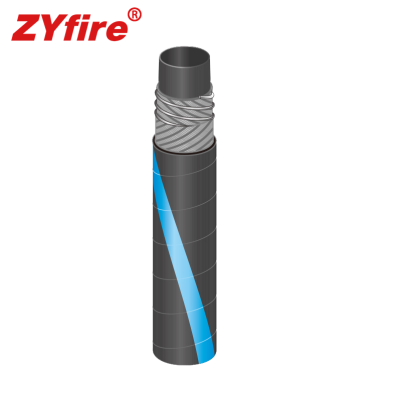
To combat pressure and vacuum issues, we have integrated a spiral wire helix within the hose wall. This design allows the hose to withstand full vacuum without collapsing and to handle pressure surges up to 20% above the rated working pressure. The helix also provides excellent kink resistance, ensuring a smooth flow and reducing pressure drops. This engineering precision ensures that our hoses maintain integrity under the most demanding operational scenarios.
Our commitment to solving these challenges is evidenced by our client successes. For example, in Houston, Texas, a major petrochemical company, which we'll call "Gulf Coast Chemical," faced recurring hose failures with their sulfuric acid transfer lines. They switched to ZYfire hoses with PTFE liners and saw a 70% reduction in hose-related incidents, and their maintenance costs dropped by 45% within the first year. Plant manager, John Martinez, noted, "ZYfire hoses have transformed our operations. We no longer worry about leaks or downtime. The investment paid for itself in just six months."
In Rotterdam, Netherlands, a specialty chemicals manufacturer, "EuroChem BV," struggled with hoses that hardened and cracked in their cold storage areas. After adopting our low-temperature hoses, they reported a 50% increase in hose lifespan and a 30% reduction in replacement costs. Their procurement director, Anneke van den Berg, stated, "The flexibility and durability of ZYfire hoses in sub-zero conditions are unmatched. They have simplified our inventory and improved our safety record."
In Singapore, "Asia Pacific Resins," a producer of epoxy resins, faced pressure surges that caused frequent hose bursts. By installing our reinforced hoses with spiral wire, they eliminated unplanned shutdowns for a full year, increasing production efficiency by 15%. Their operations head, David Tan, commented, "ZYfire's engineering team worked closely with us to customize a solution. Their hoses have been a game-changer for our high-pressure processes."
Furthermore, in Alberta, Canada, an oil sands extraction facility, "Northern Energy," used our hoses for transferring abrasive slurries. The hoses lasted three times longer than previous brands, reducing annual hose expenses by $200,000. Safety officer, Sarah Thompson, said, "The durability is impressive. We've had zero failures in two years, which is phenomenal given the harsh conditions."
Our hoses are not just products; they are integral to many applications. They are used in chemical transfer, tanker loading and unloading, reactor feed lines, and waste disposal systems. They are also employed in pharmaceutical manufacturing where purity and resistance to solvents are critical. ZYfire Hose Corporation has established long-term partnerships with leading procurement firms such as "Brenntag" and "Univar Solutions," who trust our hoses for their distribution networks. These collaborations ensure that our products meet global standards and are available worldwide.
To give you a clearer picture, here's a comparison table of our hose types versus standard hoses in key performance areas:
| Property | ZYfire Chemical Hose | Standard Hose |
|---|---|---|
| Chemical Resistance (pH range) | 0-14 | 2-12 |
| Temperature Range | -40°C to +150°C | -20°C to +80°C |
| Vacuum Rating | Full vacuum | Partial vacuum |
| Pressure Surge Tolerance | +20% above rated | +5% above rated |
| Lifespan in Harsh Conditions | Up to 5 years | 1-2 years |
Now, let's address some frequently asked questions from engineers and procurement managers in the field:
Q1: What is the maximum working pressure of your chemical hoses? Our standard chemical hoses are rated for working pressures from 10 bar to 50 bar, depending on diameter and construction. For high-pressure applications, we offer reinforced versions up to 100 bar. Each hose is tested at 1.5 times the working pressure before shipping.
Q2: How do I know which hose material is compatible with my chemical? We provide a comprehensive chemical compatibility chart based on ASTM D543 standards. Our technical team can also conduct specific testing for your unique media. Simply send us your fluid's properties, and we'll recommend the best liner and cover material.
Q3: Can your hoses be used for food or pharmaceutical applications? Yes, we have hoses that meet FDA and USP Class VI standards for food contact and pharmaceutical use. These hoses are manufactured in a cleanroom environment and are free from plasticizers that could leach into products.
Q4: What is the minimum bending radius for your hoses? The minimum bending radius varies by size, but it is typically 1.5 times the hose outer diameter for our spiral wire reinforced hoses. This allows for tight installations without compromising flow or integrity.
Q5: Do you offer custom lengths and end fittings? Absolutely. We can produce hoses in any length up to 100 meters without a joint, and we offer a range of end fittings including flanges, camlocks, and threaded connections. Our engineering team will work with you to ensure a perfect fit for your system.
In conclusion, ZYfire Hose Corporation stands as a beacon of reliability in the chemical industry. Our hoses are not merely components; they are safeguards for your operations, your employees, and your bottom line. By addressing the core pain points of chemical resistance, temperature extremes, and pressure integrity, we deliver solutions that enhance safety and efficiency. Our proven track record with clients across the globe, from Houston to Singapore, underscores our commitment to excellence.
If you're ready to upgrade your chemical handling systems, we invite you to download our comprehensive technical white paper, "Selecting the Right Hose for Chemical Transfer," which provides in-depth guidance on material selection and maintenance. Alternatively, you can contact our sales engineering team directly to discuss your specific needs. They will provide personalized recommendations and samples for testing. Don't let hose failures disrupt your operations. Trust ZYfire to keep your chemical processes flowing smoothly and safely.
Related News
More >-
![What Makes Forestry 1872 Hose Unmatched?]()
What Makes Forestry 1872 Hose Unmatched?
1. Introduction: The high-stakes world of forestry firefighting and the legacy of Forestry 1872 hose. 2. Pain Points: Abrasion, UV degradation, and coupling failures in rugged terrain. 3. Solutions: Advanced rubber compounds, through-the-weave construction, and precision couplings from ZYfire Hose Corporation. 4. Customer Success Stories: Real-world results from Oregon, British Columbia, Chile, and New Zealand. 5. Applications and Partnerships: Wildland firefighting, municipal forestry units, and OEM collaborations. 6. FAQ: Technical answers for engineers and procurement managers. 7. Conclusion & Call to Action: Download the white paper or contact a sales engineer.
-
![What Makes Industrial Hose Fail in High-Pressure Applications?]()
What Makes Industrial Hose Fail in High-Pressure Applications?
1. Introduction: The hidden cost of hose failure\n2. Pain Point 1: Abrasion and premature wear\n3. Pain Point 2: Chemical incompatibility and permeation\n4. Pain Point 3: Pressure spikes and coupling blowouts\n5. Solutions: Engineered hose construction\n6. Case studies: Real-world success\n7. Applications and partnerships\n8. FAQ\n9. Conclusion and call to action
-
![Why Is MED Approved Fire Hose Critical for Marine Safety?]()
Why Is MED Approved Fire Hose Critical for Marine Safety?
1. Introduction: The Alarm That Changed Everything 2. The Hidden Dangers: Three Pain Points in Marine Fire Safety 3. The MED Solution: Engineering Fire Hose Excellence 4. Real-World Success: Case Studies from the Front Lines 5. Applications and Partnerships: Where MED Hose Makes a Difference 6. FAQ: What Engineers and Procurement Managers Really Ask 7. Conclusion: Don't Wait for the Alarm
-
![Why Is Firequip Hose the Gold Standard in Firefighting?]()
Why Is Firequip Hose the Gold Standard in Firefighting?
1. Introduction: The critical role of firequip hose in emergency response. 2. Pain Points: Common failures in fire hose systems and their consequences. 3. Solutions: How ZYfire Hose Corporation addresses these challenges with advanced engineering. 4. Case Studies: Real-world success stories from diverse regions. 5. Applications and Partnerships: Key industries and collaborations. 6. FAQ: Technical insights for engineers and procurement managers. 7. Conclusion and Call to Action: Emphasizing value and next steps.
-
![Why Does Your NBR Hose Fail So Soon?]()
Why Does Your NBR Hose Fail So Soon?
1. Introduction: The hidden cost of premature hose failure 2. Pain Point 1: Abrasion and wear in high-friction environments 3. Pain Point 2: Chemical degradation from oils and solvents 4. Pain Point 3: Ozone and UV cracking in outdoor applications 5. Solutions: How NBR rubber covered hose addresses these challenges 6. Customer Success Stories: Real-world results from ZYfire Hose Corporation 7. Applications and Partnerships: Where NBR hose makes a difference 8. FAQ: Answers to common questions from engineers and procurement managers 9. Conclusion and Call to Action
-
![Why Blue Layflat Hose? The Ultimate Guide]()
Why Blue Layflat Hose? The Ultimate Guide
1. Introduction: The question and the answer 2. Pain Points in Industrial Hose Applications 3. The Blue Layflat Hose Solution 4. Customer Success Stories 5. Applications and Partnerships 6. FAQ for Engineers and Procurement Managers 7. Conclusion and Call to Action
-
![Why Sexless Hose Couplings Are Revolutionizing High-Pressure Industrial Systems]()
Why Sexless Hose Couplings Are Revolutionizing High-Pressure Industrial Systems
1. Introduction: The Hidden Cost of Coupling Failures 2. Pain Points: Leakage, Maintenance Downtime, and Safety Hazards 3. Solution: How Sexless Hose Couplings Eliminate These Issues 4. Customer Success Stories 5. Applications and Partnerships 6. FAQ for Engineers and Procurement Managers 7. Conclusion and Call to Action
-
![Is 50 ft the Optimal Length for Fire Hose?]()
Is 50 ft the Optimal Length for Fire Hose?
1. Introduction: The 50 ft Fire Hose Question 2. Industry Pain Points: When 50 ft Falls Short 3. The Engineering Answer: Why 50 ft Works 4. Real-World Success: Case Studies 5. Applications and Partnerships 6. FAQ for Engineers and Procurement 7. Conclusion and Call to Action
Get the latest price? We'll respond as soon as possible(within 12 hours)